
0
$0.00
0 items
First launched in 2010, Instagram combined the immediacy of a Polaroid with the social sharing functions that the current generation was born into. The app's popularity exploded, with one million registered users within its first two months alone, then 10 million in a year, 800 million as of September 2017 and well north of one billion users now.
It has always been a controversial app, from the hard-baked 1:1 square ratio of the original release, to the one-click filters, through its apparent disregard for the niceties of copyright ownership, to the bullying the platform enabled, the changes to its timeline algorithm and most recently the move away from photographs towards videos via its Story function and spin-off IGTV app.
Instagram propelled some photographers from relative anonymity into the big league. It took other non-photographers who had simply been taking photographs of what interested them and transformed them into Insta-stars. Above all, Instagram helped to bring forth a whole new career path for the millennial generation - the influencer.
The problem is that Instagram is a voracious beast. It demands a never-ending supply of new images in order to satisfy that massive audience and their infinitely scrolling timelines. Influencers, once they were on the treadmill, found that they had to find new places to photograph, new ways of telling the same story over and over again, new photographic styles to keep their feed interesting, new collaborations to increase their follower count, new experiences to share, new restaurants to #foodstagram and new products to pretend they weren't being paid to promote.
One of the unfortunate side-effects of all of this is the hug of death. Certain locations, which offer the perfect backdrop for an Instagram selfie, have been inundated with visitors. In some cases the locations have been damaged to such an extent that they have been closed to public access. The motto of the landscape photographer used to be Leave nothing but footprints. Take nothing but pictures. Kill nothing but time but these days the Instagammer's motto is more like Leave nothing but litter. Take nothing but souvenirs. Kill nothing but the environment.
As a direct result of the dawn of this new breed of photographer - namely the person who takes images purely to share online with a following on social media - locations that have been visited for a hundred years by photographers are being damaged, destroyed and closed. It might sound sensationalist, but the evidence is clear. Bush tracks and paths that were once little used and overgrown are now worn to the point of collapse. Rock structures that survived for millions of years have been eroded and destroyed. Land-owners who were happy to let the occasional person cross their properties are now closing the gates forever. In many cases it was just the serenity that attracted the occasional photographer to a location - but that too has been shattered. What were once quiet and lovely spots out in the countryside are now simply locations to be ticked off a checklist as Instagram users try to create their versions of the photos they've admired online.
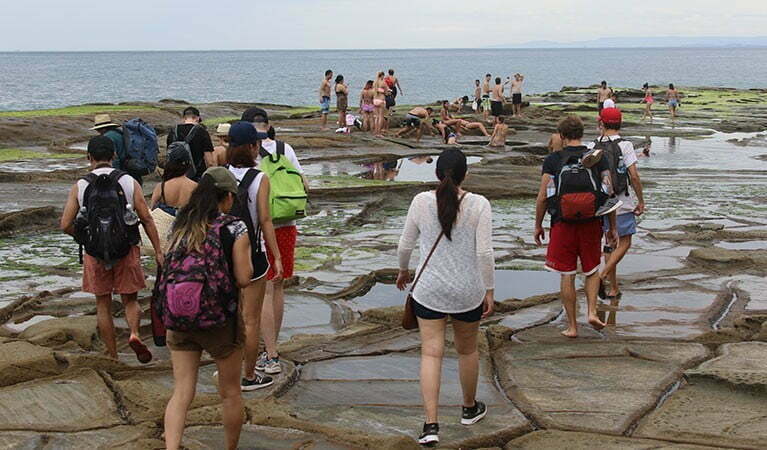
Here in Australia there are plentiful examples of the Instagram hotspot phenomenon. Once upon a time the Figure 8 Pools were a little known natural rockpool structure located on the edge of the Royal National Park near Burning Palms. Then the location started appearing in the feeds of some well known Instagrammers and then in Australia.com's official feed, and before you knew it the place had become insanely busy. People who had no knowledge or awareness of the dangers of the coast arrived in large numbers and, when they weren't queueing for their turn in the pools, were getting swept off the rocks by rogue waves and being badly injured in the process.
It's got so bad there that National Parks have totally changed their information page about the Figure 8 Pools. Back in 2015 it used to say, "Deep enough to take a swim or paddle your feet, the rockpools are home to a variety of sealife including sea urchins, chitons and zebra snails." Visit the same page now and you'll see nothing but extensive warnings about how dangerous it is and how far it is (four hours apparently). Further down the page they clearly identify the issue: "Pick a better spot for a selfie. Instead of breaking a limb at Figure Eight Pools, take photos at some other beautiful places. Avoid the crowds that Figure Eight Pools is now infamous for."
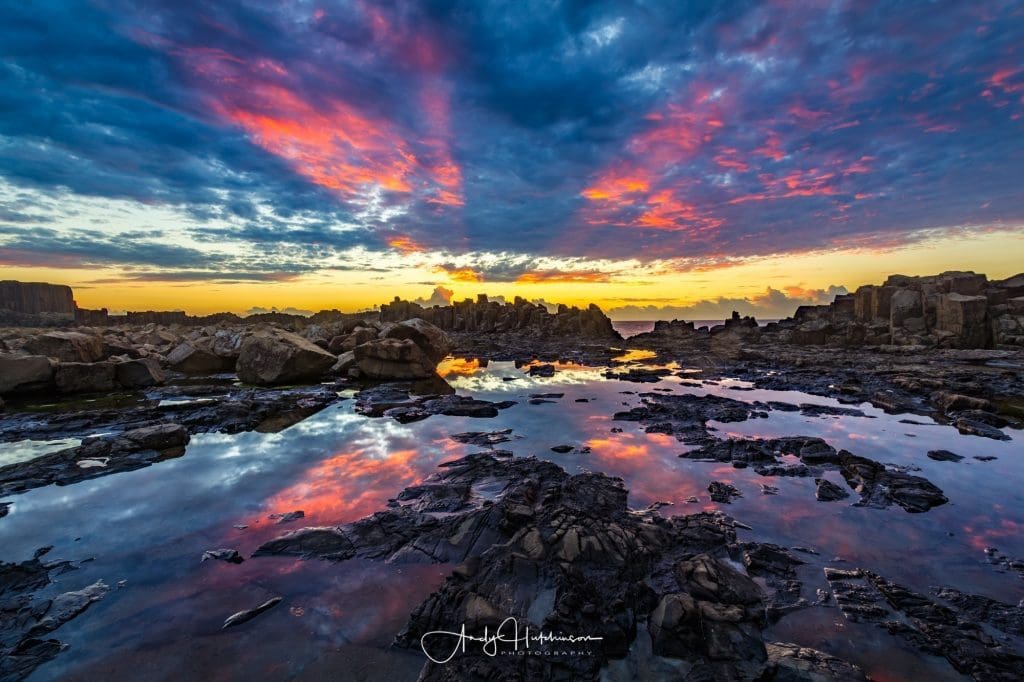
Long before it became one of the flagship photography locations on the south coast of New South Wales, Bombo Quarry was a mecca for rock climbers. These days some of the photographers who visit the quarry do employ some basic rock climbing skills but this is to put themselves in the frame of their photograph. I've only lived in this part of the world for 12 years but I find it amazing how much busier Bombo is these days - it would be rare day when you get the place to yourself. Moreover it does not matter when you visit because it's an extremely popular spot at sunrise, during the day and for nightsky photography. Within the last couple of years it has also become established as a wedding photography location for Sydney newly-weds looking for something other than the classic Observatory Hill shots. It will soon become far busier still, because the local state M.P. Gareth Ward announced funding for a trail hilariously named the Bombo Headland Eco Walk. I think he meant Ego, not Eco.
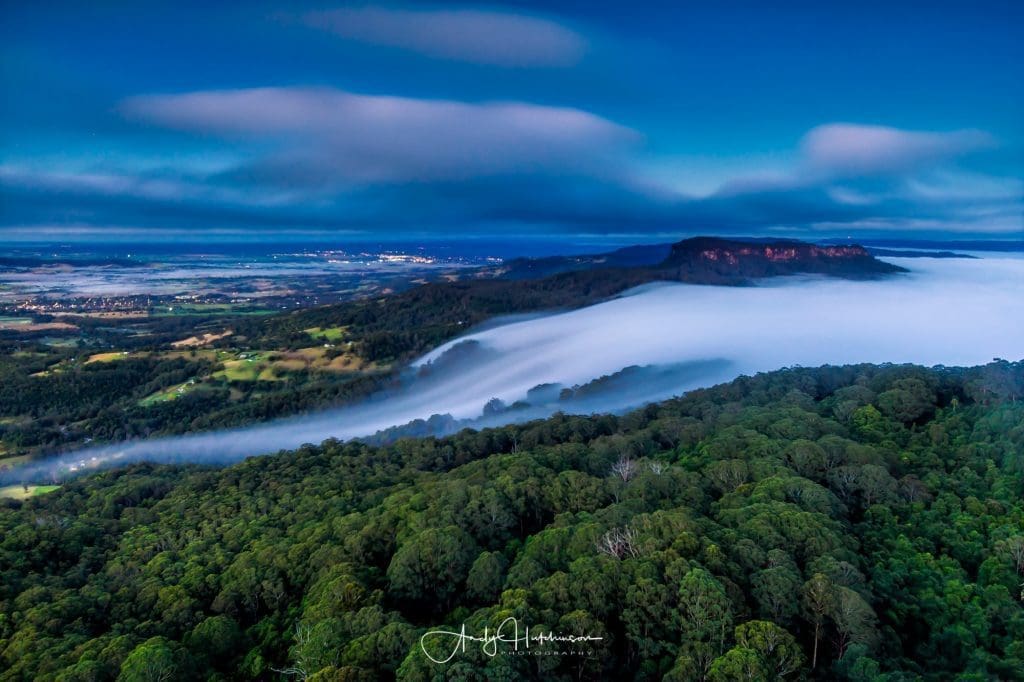
Drawing Room Rocks is a fabled lookout on the edge of the brilliantly named Barren Grounds National Park. When we first moved to this area virtually nobody knew how to get to it and we only ever found out how to reach the location through a tortuous series of connections with various locals. The first time we walked the indistinct bushtrack to the top it was really overgrown and so well hidden that we took four wrong-turns on the way up. Then a couple of years ago, a travel show featured the spot and the local Wollongong newspaper ran an article about the location and faster than you could say tan-and-teal it was well and truly on the map. The tiny carpark is full before sunrise and people park on the edges of the unsealed road, damaging the sidebanks. The track itself is badly eroded and you certainly wouldn't have any problems following the right path to the top, it's like a road now. The delicate stones at the top that give the location its name are also showing the signs of wear and there is graffiti on some of the rocks. Visit the place during the summer holidays and there are as many as 100 other people up there.
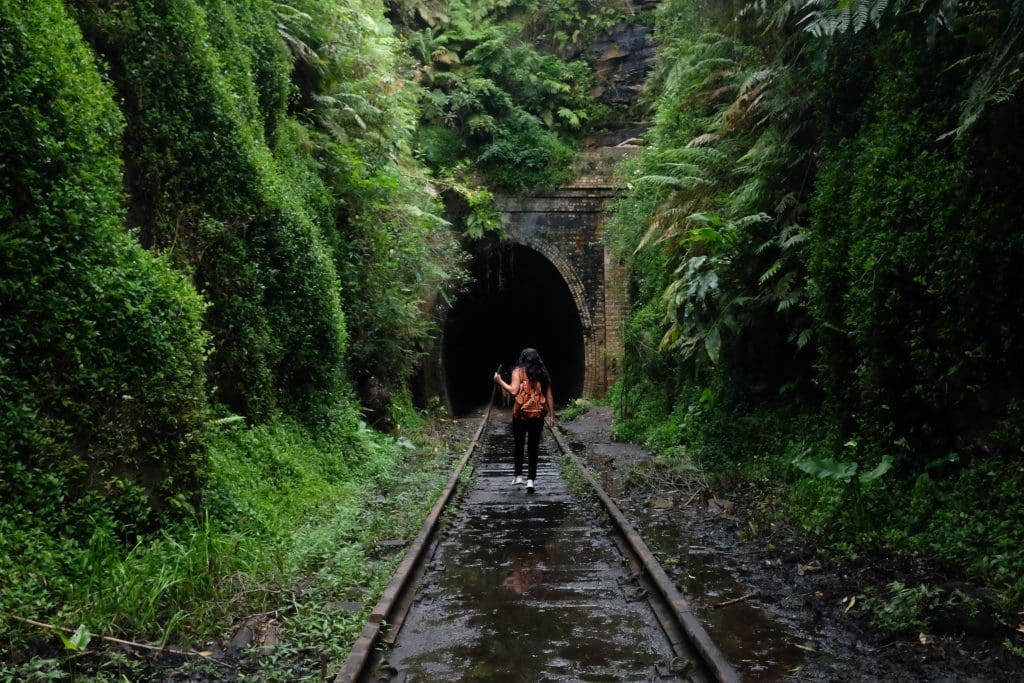
The photographic community where I live has recently been mourning the loss of one of the most photogenic locations south of Sydney - the abandoned railway tunnel at Helensburgh. An extremely cool location in its own right, it was also home to a colony of extremely rare glowworms which you could photograph at night using long exposures. Unfortunately the tunnel has been on the Instagram map for a few years now and many of those visitors to the site used flares or spun steel wool in the tunnel to create cliched ember shots and, in the process, nearly wiped out the poor old glowworms. Consequently the owner of the tunnel (Crown Lands) has erected a steel fence across the entrance to the tunnel and have said that they will keep it closed until the glowworms have had sufficient time to recover. They will only be permitting limited access thereafter, probably at weekends only. And that's why we can't have nice things.
These same issues are playing out at locations all around the world. All of those locations that were previously only known to a handful of locals have been photographed, Instagrammed and geo-tagged and now the world and its cousin are beating down the door with selfie-sticks, GoPros and drones. The managers of these locations, usually one of the national park organisations, try their best to manage the sudden influx of visitors. But parks organisations worldwide suffer badly from being under-resourced and they do not have the manpower or the funds to do enough to fully protect these locations. Often the only option they have, as custodians of the land, is to close that location completely.
The problem I have with all this is that I am complicit in the very problem I am highlighting. For years I have shared my landscape photographs online and given full location information for anyone that would like to visit. In my defence, I did this in the mistaken belief that the people who would visit would share the same values as me - to leave no trace - to respect the landscape. Unfortunately I was wrong. In recent months it has lead me to reevaluate how I share and what I share. For many amazing places, the cat is well and truly out of the bag, but others remain relatively unknown. So I have taken the decision to stop geotagging the photographs of all but the most obvious locations in the hope that they stay the way they are. We've thrown enough amazing locations under the bus already, let's start protecting what's left.
Well now, my little blog post went a little bit viral and my server has been copping it big time. There has been some amazing feedback to this article - most of it in agreement with me - some not so much. Those who were most outraged by my post don't actually seem to have read it, particularly the last paragraph, which is only to be expected in this post-truth Trumpian era of ours - but it's highly amusing all the same. Anyway, I just wanted to address some concerns and clear up a few things that other folks have raised.
Firstly - yes, I probably should have finished on a more upbeat note in which I encouraged folks to clean up after themselves, to consider the natural environment and to 'leave it like you found it'. In my defence, I don't think that the kind of people who are the problem are going to be reading articles like mine in the first place. The kind of people who treat the natural world such disregard care only about getting to 50,000 Instagram followers and if that means a few pristine bush trails get trampled in the process then so-be-it. I guess the mantra 'education not vilification' is a worthy one and an ideal that I will aim for in the future.
Secondly - as I say in the mea culpa in the last paragraph - I am part of the problem too. I fully accept it and henceforth I will be taking steps to ensure that I am not part of the problem.
I think the central issue here is that two worlds have collided.
For many years the world of the landscape photographer was a largely closed one in which a few geeky souls went out into the countryside, at ludicrous hours of the day and night and, using skills learnt through years of practice and took photographs of the natural world. It was a genuinely small clique of people who, by and large, operated under the same unwritten code of ethics. As I see it, it all changed in three stages - 1) when we went from film to digital, 2) when we went from high-end DSLR to smartphone camera and 3) when we went from printing our photos to uploading them to social media. The bottom line is that in 2018 - everyone is a photographer and that old unwritten code of ethics simply does not figure in the lives of most people. Combine the exponential increase in the number of people taking photographs with the world of social media and, in hindsight, it's easy to see that it was always going to play out the way it has.
It has been pointed out to me - and I completely agree - that the massive increase in tourism since the 1990s is also to blame for the current situation. Even extremely well known places that have been on the tourist map for a hundreds years, such as Yellowstone in the states, Abel Tasman National Park in New Zealand, Lofoten in Norway, the Lake District in England, Santorini in Greece and pretty much the whole of Iceland, have all been suffering from a massive increase in visitation rates. Even newly 'discovered' locations such as Torres Del Paine in Patagonia, have been feeling the pressure of greatly increased visitor numbers. It is becoming increasingly clear that the only way of managing this in the long-term is by limiting the number of people who can access a particular area at one time - although I suspect the situation will have to get much worse than it currently is for the authorities to step in.
The other argument - and again I completely agree - is that there is no malice intended by the people sharing locations. In many cases they had no idea that their photograph would go viral, or be noticed by an influencer and copied, or get picked up by a tourism organisation and shared.
Thanks to everyone that commented, whatever their viewpoint, at least people are talking about it now.
Update (Oct 2018): Saw this article in The Guardian and thought it was a sign of things to come. "One of the world’s most popular beaches, made famous by the 2000 film The Beach, starring Leonardo DiCaprio, is to be closed indefinitely to allow it to recover from the damage caused by millions of tourists."
Note: I've written a more recent article with up-to-date information about drone regulations right in 2020 here.
The problem is that those same people who are snapping up drones tend to have absolutely zero knowledge of the legalities of flying aircraft. I doubt they even gave it a second thought. All they saw was a cool quadcopter for sale, with promises of piss-easy remote-controlled flight and the awesome possibilities for photography and video and they wanted a piece of the action. And you know what, I don't blame them. I doubt that the sales-person in the shop said anything. I doubt there was any information at point of sale about the legalities of flying. I doubt there was anything at all in the box beyond a tiny piece of paper that could easily be lost in amongst all the other crap you get with electronic products such as warranty details in 57 languages. And who bothers reading some crappy slip of paper when you just spent a grand on a fucking awesome flying gadget? No-one.
So unless you come from a model aircraft background or you've done any actual flying, it's fair to say that you probably know nothing whatsoever about the law and how it relates to your expensive (or not so expensive) quadcopter. You probably won't know anything either, until you start posting your photos and videos online and the self-appointed drone militia will start taking exception to your illegally photographed or videoed work.
The kind of people who will comment on your illegally photographed or videoed work will undoubtedly have all the charm and diplomatic skills of a strung-out meth addict. They will make mention of laws, they will make mention of arcane regulations, they will make mention of civil aviation authorities and they will almost certainly make mention of fines. They will rub you up the wrong way and it will undoubtedly degenerate into a swearing contest. If they're feeling like it then they might even threaten to report you to CASA. Hell if they're feeling particularly shit-headed that day they might even do it. To be a member of the drone militia you have be an anally retentive little-Hitler. So be ready for them, because they will come for you.
So in order to avoid any unpleasantness, and to bring you up to speed, allow me to explain the ins and outs and the ups and downs of flying your drone. I am based in Australia and this is an Australian focused article, but the laws are very similar in most western countries. America, the UK, Canada and much of Europe has very similar legislation. So let's get into it.
There are, broadly speaking, three kinds of airspace in most countries - uncontrolled, controlled and restricted.
Controlled airspace is air through which aircraft fly under the guidance of air traffic controllers usually through specific air corridors and at specific heights. In this airspace standard operating procedures take effect for all aircraft, but it is perfectly okay to fly your drone within it as long as you stick to those rules.
Restricted airspace is air through which you cannot ordinarily fly because it is heavily used or a military zone. Some airspace is locked down 24/7, some is operational during specific hours or as required.
Uncontrolled airspace is everything else. You can do what you want within uncontrolled airspace, but in this era of cheap jet air travel, you might be surprised to discover just how little of this exists.
The kind of airspace you are within trumps all other considerations when it comes to putting a drone up. For instance, keeping under 120m in maximum height is irrelevant within restricted airspace because you are simply not allowed to fly there.

So how do you find out what sort of airspace you're in? You need to consult the maps produced by your country's airspace regulator. Here in Australia that organisation is CASA and we can view the airspace on their website (AirServices) or in one of several apps which use that data (CASA's own 'Can I fly there' app, OzRunways or AvPlan EFB).
The activation of areas of restricted airspace is covered by an official announcement called a NOTAM (Notice to AirMen). They are extremely hard to decipher unless you've had some flight training so instead airspace apps access the NOTAMs and indicate visually on an airspace map when an area of airspace is active.
It is possible to fly your quadcopter in areas of restricted airspace as long as you have permission from the controlling authority. You can get contact information for that controlling authority from a document called the ERSA (En Route Supplement Australia) which is published by AirServices Australia who oversea the administration of the airspace - here's a link to the update current to this post's publication date. Simply click on the local tower in the list on the left and look for the section titled RPAS. For instance in that section for my local tower it says this: RPAS requests and enquires are to be sent to: 453sqnnwaflt.ops@defence.gov.au with at least 10 business days PN. RPAS approval is subject to all MIL OPS and status of active restricted areas may have additional restrictions imposed or be cancelled at short notice. So as you can see, you need to give 10 days notice to that email address and approval is dependent on any military activity and the status of the airspace.
Now if that all sounds confusing as fuck, I'm not surprised, because it is. The authorities need to find a better way of communicating this information to the general public. In the mean time, if you need someone to give you the explain-it-like-I'm-five version, contact either your local airfield or your country's airspace regulators, or ask an experienced flyer.
Most countries have a baseline list of requirements for drone flights and they're usually fairly similar. The reason they're quite similar is that most of them are just common sense. Here in Australia they are:
The 120m height rule is AGL (that's above ground level). So if you go to the top of a mountain and fly your drone out, it should descend as required so that it is always within 120m of ground level. To be clear about this, you can't take off from a 500m mountain and maintain level flight outwards.
The populous area rule here in Australia applies to any place with as much as a single person in it. So you can't fly over towns, schools, factories or unsuspecting pedestrians.
The night rule is fairly clear cut. Here in Australia you can only fly about 30 minutes before sunrise and about 30 minutes after sunset.
The 30m rule here applies in all directions. Many people mistakenly believe that as long as they're more than 30m up they can fly over people's heads. This is incorrect - the 30m rule applies horizontally as well as straight up. Picture a dome with a 30m radius over the top of everyone and every thing and you're half way there.
The visual line of sight rule means that you're not supposed to fly your drone (with its factory listed 5km range) by means of the video feed it's transmitting to your iPad. You're supposed to fly it only as far as you can safely orient it in the air and fly it back if problems occur. Of all the CASA regulations this has to be the one I see most commonly being ignored.
The 5.5km airfield/helipad rule means you can't fly your drone at all within 5.5kms of the perimeter of the airfield in question.
As I said, a lot of this is simply common sense. Some of it is downright vicious. The combination of the populous area and the 30m rules, in particular, mean that in Australia it is virtually impossible to shoot photography in anything remotely approaching a built up area.
There are three mainland Commonwealth Parks - Uluru, Booderee and Kakadu and three island Commonwealth Parks - Christmas Island, Norfolk Island and Pulu Keeling. You cannot fly your within any of the parks, period. To read a little bit more about this, please see my earlier post on the subject.
National Parks
National Parks cover a vast amount of Australia and they have a marginally better attitude to drones than the Commonwealth Parks authorities. At least it's not as bad as the US where it's just a blanket-ban. Their drone policy is explained in full here and says that 'Visitors wishing to use drones in parks must obtain consent from the park manager.'
That sounds great doesn't it, however you should be prepared for the park manager to deny your request. Some of them will deny it summarily, some of them will allow it only if you are fully licensed and insured and a tiny fraction may cut you some slack. If you're flying commercially in the park you're supposed to register (that goes for normal photography as well as aerial) and they have a whole raft of legislation (including Civil Aviation Act 1988 (Commonwealth), Civil Aviation Safety Regulations 1998 (Commonwealth), Filming Approval Act 2004, National Parks and Wildlife Act 1974 and the National Parks and Wildlife Regulation 2009) which they will wave in your face should you try and argue with them.
Council Land
In addition to all the restrictions above, many councils have by-laws in place governing where and how you can fly your drone. For instance in the city of Sydney, all commercial activity requires permission to take-off or land on public land. Some councils (such as Leichhardt in Sydney) have simply banned drones outright, meaning you can't take off or land on council land, which is pretty much everywhere.
So, having read all that, you may be left wondering where exactly you can fly your drone down under. Assuming you are not in an area with a blanket ban on drones (such as the afore-mentioned Commonwealth Parks), you should install one of the better smartphone apps and use it before you fly in order to find out.
The three best apps I've used are Can I Fly There, AvPlan EFB and OzRunways, but only the CASA app is free - there other two come with hefty annual subscription fees of between $100 and $350. UAV Forecast is useful for basic weather guidance, but useless for airspace information. Flight Aware is a useful app that shows aircraft live on the map, though it is not foolproof as small aircraft (microlights etc) do not show up. The most useless app I tried was Safe to Fly which only showed airfields and not all of them at that.
It's a pretty depressing picture here in Australia and if you're new to drones then it might make you want to return your expensive gadget to the shop. I know people who have done exactly that, frustrated by the endless rules, legislation and red tape. Alternatively you might do what many drone fliers opt for, which is the partial adoption of the laws and the fudging of video or photographic meta-data, but look out for the drone police.
So, like most of us, I suspect, I installed Vero and signed up and had a look around. And you know what, it's actually not too bad at all. I like the ethos behind it, I like the design, I like the tiered sharing function, I like the lack of advertising. The big question is - will it ever amount to anything? Do I need another social media platform in my life when I'm already struggling with Facebook, Instagram, Twitter, Pinterest and all the others? If I ignore this platform will it go on to become the next Instagram and I'll miss out?
Is your photographic style such that it will attract a wide following or will the people who succeed on Vero be the same attractive young ladies with bikinis and wide-brimmed hats who currently do so well on Insta?
Fear of missing out is what seems to be driving this app/network's early burst of interest. So far I have seen nobody except a select few paid interests (GQ magazine etc) and thousands of photographers. In other words, at this stage, its value in terms of promoting photography is zero. Why? Because other photographers only want to promote their shots, not someone else's. Unless and until the general public actually start adopting Vero, it's a nice shiny new playground with no value at all. And who's to say that photography will be the USP that drives Vero forward in the future? Maybe it'll be video instead, or recipes, or maybe bands will start using it and it'll be this generation's MySpace. Who knows.
Like everyone else that relies on social media to promote their photography I'm just as guilty as the next person. If anything I feel that FOMO shudder more than many folks because I totally missed the Instagram boat. I installed that app early on its life, uploaded a few shots, wondered who in their right mind wanted to see horrible over-filtered postage-stamp sized photos, and deleted it. So don't go seeking advice from me on the long term prospects of Vero.
Should we all expend our efforts on creating a working presence on Vero? Is it possible that the platform will produce the sort of break-out 'stars' that emerged on Instagram and who now get flown around the world by tourism organisations, hotel chains, airlines and fashion labels to promote their products and services? Is your photographic style such that it will attract a wide following or will the people who succeed on Vero be the same attractive young ladies with bikinis and wide-brimmed hats who currently do so well on Insta? Why is my crystal ball so foggy?
Let's take a moment to consider some of the other services that looked like they'd be the next big thing. Phlow, anyone? Ello? EyeEm? I joined them all and stuck a couple of photos up there - more than a couple in the case of EyeEm, but they serve no purpose for me and I let them all slide. Since I haven't heard much about any of them since then, I suspect most of us did the same.
As we're all feeling our way with Vero, it's interesting to watch it evolve. I've been keeping an eye on the trending hashtags on the service (when it's online!) to get some impression of where it might headed and, actually, film seems to be figuring more than photo - oh and cosplay. What I'm not seeing are the crossover hashtags that meant that services like Instagram or Pinterest took off - and I'm pretty sure they're crucial to this platform's survival. In the mean time I'll keep posting my photos and videos, because, you know, I wouldn't want to miss out.
Update March 2019 - had a bit of a chuckle re-reading this article. Absolutely no-one I know uses this app/social media site. None of the people who signed up when I did are active. It's yet another in a looooooong line of flash-in-the-pan concepts that come to nothing.
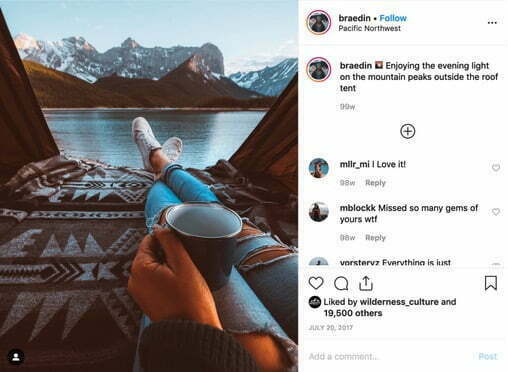
The concept - Grabbing life by the balls and getting out into nature, exploring places you have to hike to, being out in nature and simultaneously at one with it.
The result - You have mastered the basics of a) walking and b) photography, but do not seem to have brought your imagination along for the ride and applied any form of creative process to your #travelstoke #adventurephotography #yolo portfolio.
Alternative variations - open van door (#vanlife #actuallyjustabumwithadslrandalongboard), open sleeping bag (#tentsareforpussys #madlad)
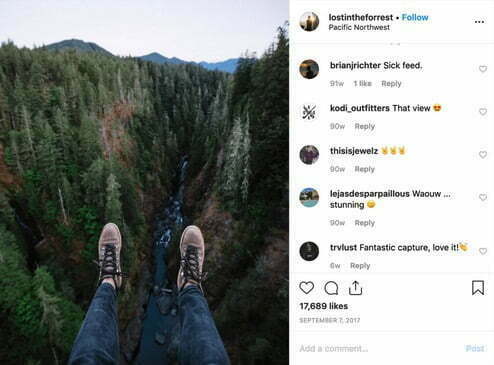
The concept - Living on the edge, facing danger head-on, the fragility and insignificance of our place on this planet.
The result - People with acrophobia clench their rectums so tight they won't shit for a week, everyone else wonders if there's a special category in the Darwin Awards under Photographers Plummeting to their Deaths on Crumbling Cliff Edges
Alternative variations - The drop is in an optical illusion and the daredevil adventure photographer would drop approximately three feet if they went #overtheedge
Alternative alternative variation- Hanging by one hand from a crane #russiansonly #nutjobs

The concept - Suggesting the immutable infinite nature of the galaxy, the insignificance of our place in the universe and the juxtaposition of the light from our galactic core with our ionic emissions from Earth.
The result - Man with 'World's Brightest Flashlight' (that he picked up on Amazon specifically for this purpose) looks like he wandered into the shot by accident and just heard a noise in a nearby tree.
Alternative variations - Stand on a rock
Alternative alternative variation - Stand on a rock, wearing an Ever Ready headtorch and hold your hands out in a Christ-like pose while your friend light paints you from behind.
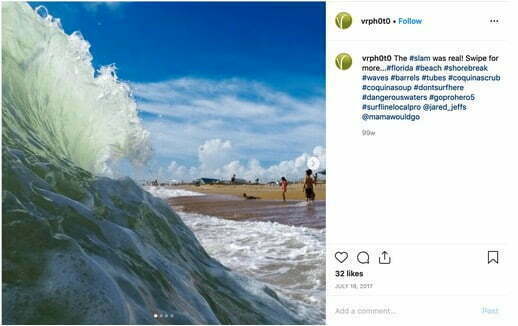
The concept - You're a waterman, at one with the ocean, as at ease in heavy surf as you are on dry land, the ocean is an unforgiving mistress but you face that danger every day and find beauty within it. #beachlife #surfsup
The result - You're no Clark Little, so you shot with a small zoom inside a two foot wave that was breaking metres from the beach, but when you can afford a waterproof housing you'll definitely get into some huge 2metre swells. #yourenotfoolinganyone
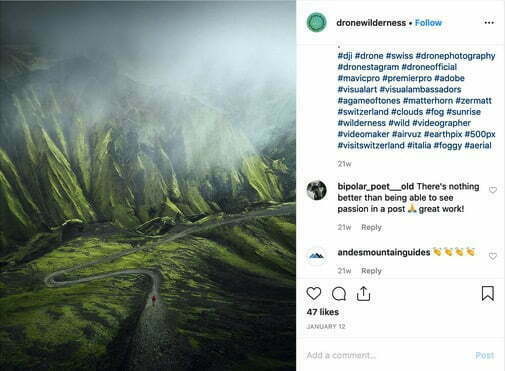
The concept - Marvelling at the beauty of nature and mankind's connection with it.
The result - You look like a blob of seaweed on the sand and then fly your virtually new Mavic drone into a tree because you were too busy trying to look deep and soulful when you should have been, you know, paying attention and shit. #djisupport
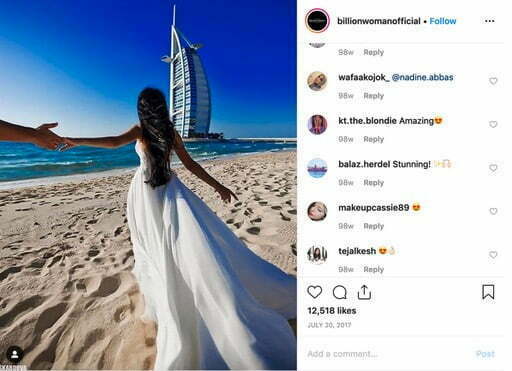
The concept - You're a classy world traveller with a knockout partner/soulmate who is leading you onwards towards the next incredible experience in your non-stop thrill-ride of a life. #soblessed #instatraveling #theregoesthetrustfund
The result - 300 Pakistani men flood your Instagram comments with 'show your vagine beautiful'
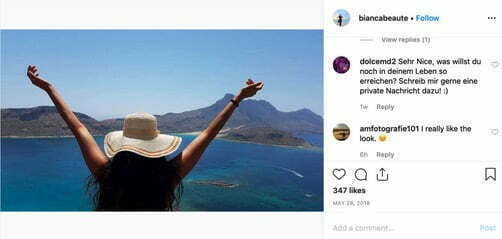
The concept - Young people eschew their mobile digital devices and pumpkin spice lattes for meaningful exploration of the wilderness.
The result - It's pretty obvious you pulled up at a scenic lookout with a 50metre walk from the carpark and that your girlfriend is probably a) freezing her petite tits off and b) there's a queue of other girls in folksy summer dresses and floppy boho hats waiting for their #travelstoke moment. #vsco #intothewild #butnotforlong

The concept - You're easy like Sunday morning, totally at ease with travelling the world, always open to new experiences and new tastes. #foodielife #thenameofthetravelorganisationthatpaidmetobehere
The result - Oh look, another photograph of some artfully arranged halloumi, avocado, rocket, pear, cherry tomato and balsamic dressing on wretched fucking sourdough toast #ittasteslikerubber #ididntactuallyeatanyofthis
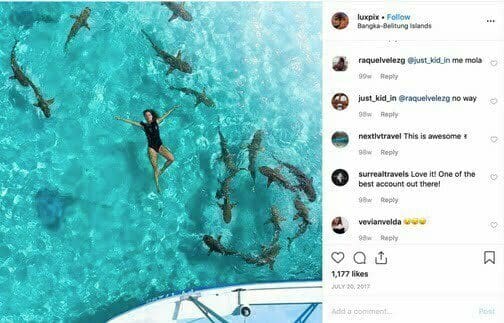
The concept - Far from civilisation, you have connected with your inner soul, gazed far with your third eye and are at one with Gaia within the incredible surroundings of pristine nature. #wildernessculture #passionpassport #erectnipplesandacameltoe
The result - Just as you begin to relax in the water you see a shadow moving in the water beneath you and thrash your way to the shore/bank/boat before collapsing in a sobbing hysterical mess on the shoulder of your stylist. Years later you show the photograph to your psychiatrist and tell her that this was the precise moment when you became petrified of open water. The psychiatrist doesn't believe you and tries to point the finger of blame at that time your brother Timmy pushed you into the backyard paddling pool and you landed awkwardly on your My Little Pony water pistol.

The concept - You are just so high on life and so athletic and so healthy that you just can't contain yourself and you need to jump ecstatically into the air like a beachy ballerina.
The result - You wanted to mix things up a little bit because you're on your fifth straight shot-from-the-back folksy dress/boho hat scenic lookout #travelstoke so you thought you'd like, jump, in a bikini. Unfortunately it took 172 attempts to get the right look and your long suffering boyfriend Miles is so over it he's tossed your Sony A6500 into the ocean and walked back to the car where he's now repeatedly kicking the glove box of your hire car which will mean you lose your security deposit.
It's not just photographs of the Aurora Borealis that leave me weirdly indifferent these days. Close-up with a shark in a kelp forest? Seen it. The Wanaka Tree in New Zealand at sunrise? About the 15th today, thanks. An above-and-below of a tropical beach with a sea turtle? Old news, mate. Bomb shot taken by drone over a beach with crystal clear waves lapping at the shoreline as a bikini-clad buxom babe gazes skywards? Swiped away. Okay, maybe a brief pause for that one.
How the fuck did the amazing become so commonplace so quickly? Why am I no longer excited by the incredible sight of the Northern Lights? When did photography turn into a never-ending competition for spectacle? When did it all become so fucking boring?
It was all so much simpler in the past. Once upon a time a skilled band of photographers visited exotic locations and took amazing photographs for amazing magazines such as National Geographic, Time and Life. Other skilled photographers took photographs of mind-bogglingly exotic women wearing haute couture frocks and they appeared in calendars sponsored by tyre companies. Thrilling news stories about acts of heroism, war, terrorism or celebrity sightings were skilfully captured by news photographers. That was the way it used to be. But the old way of doing things was swept away by a tsunami of digital camera technology. The explosion of interest in photography (thanks to digital sensors, the rise and rise of Instagram, Pinterest and Facebook and, of course, the birth of the 'influencer' travelling the globe photographing once-exotic locations) has made the amazing commonplace. Where once a single photographer would travel to the arctic circle and photograph the Aurora Borealis, now it's just another right of passage for every wannabe Instagram influencer with a couple of thousand followers. Yes, photography has been democratised, but in the process it has also become increasingly banal.
And yes, I'm just as guilty of being on this merry-go-round as everyone else. My photographs tap into the same identical themes as everyone else. If anything, I'm worse - I'm a dreaded sunrise/sunset photographer, surely the lowest of the low in the landscape photography hierarchy! How fucking cliched can you get? Oh don't get me wrong, I don't have any great desire to photograph double-rainbows arching over volcanoes spewing rivers of molten lava cascading into crystal clear water as a killer whale emerges from a perfectly tubular wave being ridden by Kelly Slater wearing a clown suit, or something equally edgy. I'm quite happy taking my sunrise and sunset photos. But equally I can fully understand why someone would swipe straight past my photos in their Instagram feed. They're mainly ordinary, occasionally vaguely memorable - just like pretty much everything else on Instagram.
Could the globetrotting influencers be to blame? Off they go - Torres del Paine in Patagonia this week (god not again), Gulfoss Waterfall in Iceland tomorrow (not that old chestnut), Plitvice lakes for the weekend (Zzzzz). By following their Instagram feeds in our hundreds of thousands and thereby attracting sponsors eager to tap into that audience, we have created a photographic production line that renders the extraordinary ordinary by virtue of endless repetition. I don't look at their photos and think that I should go there I simply wonder why these guys are all so majestically unimaginative.
And it's not just the locations that have become so commonplace - it's photographic styles and photographic techniques too. There have been numerous waves of photographic styles popularised over the years, from the retina-scorching HDR to the crush-the-blacks trendy urban look. You know the writing's on the wall for a particular style when it turns up as a ready-made filter in Snapseed. Photographic techniques become similarly commonplace. Oh sure, Clark Little was (arguably) the first guy to popularise the inside-a-shorebreak wave in the Instagram era, but he's got about a thousand wannabes biting at his heels, Aquatech housings in place, dome ports ready. And how about drones? Governments might be clamping down on drone use, but so many photographers (yes, myself included) have jumped on the bandwagon that aerial shots are becoming as cliched as the arms-aloft sunset selfie. I feel a sense of self-loathing every time I hover my Phantom 4 over a the azure waters of our local coastline.
So what does the future hold? What's the next photographic technique that will shake up everything up for six months before becoming old news? Will these globe-trotting influencers keep on photographing the same flagship locations endlessly? Is the whole concept of originality in photography a dead-end? Am I the only one suffering from Instafatigue?
Whatever the reason, the simple fact is that once you started posting, you are in competition with every other photographer on the site. Whether you like it or not, your photograph is judged alongside those of the entire membership, rank amateurs and seasoned pros alike. The aim of the game is to get your photograph in front of as many eyeballs as possible and that means playing the like-you-like-me game, getting involved, interacting, posting comments, replying to discussions - you know the drill.
But what if I was tell you Neo, that you were doing it all wrong, that many of the people you thought you were competing against in this photographic game of life, were not honest photographers working hard to get their photos seen? What if I was to tell you that this playing field is not only hilly as fuck, but littered with the spent corpses of a thousand disillusioned photographers? Hmmmm? Take the Red pill, Neo and follow me down the rabbit hole.

Right now, at this very second, an army of bots, scripts and hacks are hard at work on all of your favourite social media and photo-sharing sites. These tools come in a wide variety of formats, from simple macro-based scripts, to polished commercial apps and all the way up to cloud based services with slick websites and monthly subscriptions. If you've ever wondered how some people seem to suddenly bloom in popularity, seemingly out of nowhere, then the odds are that they're using one of these commonly available tools.
Like most social engineering, the techniques employed by the designers of this software relies on the way that we humans interact with such social sharing sites. They work by blowing smoke up your arse and making you think that someone 1) liked your photo, or 2) thought so much of it that they took a minute out of their day to comment or 3) loved it so much that they shared it with their friends. Feeling the glowing warmth of that smoke up your back passage you of course reciprocate and like, comment and share back, because that's the nice thing to do and you're a nice person. Well sorry mate, but the odds are that the vast majority of times this has happened to you, you were giving a bot a reach-around.
If you're a minor league photographer with a couple of hundred or thousand followers or even if you've just started out, the traffic you're seeing on your photos will have been grossly inflated by artificial likes, comments, shares and follows. Sorry to burst your bubble, but it was the Red pill you swallowed, not the fingers-in-ears Blue pill. Don't choke on it, we have more to discuss.

Let's start with one of my personal favourite sites (heavy sarcasm) 500px. I wrote an article about 500px, five years ago, and it continues to be the most viewed article on this site by some margin. One of my complaints about the site was that photos were being upvoted irrelevant of quality. I don't know why I didn't see it at the time but it's obvious to me now - this is the result of heavy bot usage.
You can get a wide variety of tools to improve your standing on 500px. Why not begin a simple new user bot. This Python script available for download on Github will "automate the process of following new users on 500px.com". That's right friends, fire up this little script, let it loose with your account and before you know it you'll be racking up the reciprocal follows from guileless punters.
For a more sophisticated tool, how about we check out our old favourite Flickr? Admittedly having a popular presence on this site is nowhere near as useful as the same thing on Instagram, but it's still a helpful thing to have. The Flickr Attention bot will mass follower, mass favourite and mass comment and favourite.

Such is the sophistication of the modern popularity bot that these days you can buy yourself a subscription to a cloud based service. These are particularly popular with Instagram users looking to increase their fanbase and not prepared to, like, be good at taking photographs.
Over at Instagress they're not hiding their light under a bushell - in fact their front page proudly claims that their tools can,
Accelerate your life on Instagram for more targeted likes, comments and follows
For a very reasonable $10 a month, their cloud-based services enables you to,
Create a small robot clone of yourself with the same interests and style, and then let it work for you on Instagram
All the goodness, none of the calories friends. Or how about Gramista - it's four times the price of Instagress, but they do promise that,
Gramista will automate liking, following and unfollowing just like a human being would.
That's right, not only will their product pointlessly follow people in a shameless effort to boost your own flagging viewer numbers, but they will also unfollow you if you don't return the favour! It's hilarious isn't it.
Over at RoboLike, for a commendable $13.99 a month you can automate both your Instagram and your Twitter interaction. The team say that,
With the Robolike Instagram auto bot coming in at around 80 likes per hour and Twitter auto bot at 60 per hour, you get way more exposure to your account then you can do alone. Put your thumbs to rest and let us do the liking for you.
Because god forbid a photograph receives an actual human response of some sort. It's pure gold mates.

You've probably heard about the digital sweatshops in Asia and Africa where a small army of impoverished mouse-clickers will descend on your Facebook page and shower you in utterly meaningless likes, all for the price of a Satsuma. Well, I'm guessing that the move to fully automated systems is bad news for the Mumbai economy. Or maybe all those click-farmers have transitioned into the far more lucrative encryption-ransom and fake-Microsoft-support games now. It's important to keep your portfolio fluid, after all.
Over at MonsterSocial ("Undefeated for more than 3 years. Our 2000 customers can’t be wrong!") they claim to be,
The #1 automation bot for Facebook, Instagram, Pinterest, Tumblr and Twitter
These guys will let you automate every element of your social media presence and, while I can't see it in the small print, I believe they'll even shake your dick for you once you've finished pissing. Check out the video below where a dude walks through the whole process of farming likes using stolen or fake Facebook accounts.
I know, right? And if you'd rather not entrust your accounts to a cloud based service then there are many software companies producing apps to help your accounts out of the no-friends doldrums. At BoosterBots they will sell you software to fake your popularity on 500px, Behance, Cafepress, eBay, Instagram, Etsy, Facebook, Pheed, Pinterest, Redbubble and Twitter.
So by now you're probably thinking something along the lines of, "Fuck it, if everyone's doing it, then count me in too." And that of course is entirely your prerogative. If you wish to engage in the like-follow-share tennis match being played between these armies of bots, then go right ahead. You may want to consider the possible ramifications of using these bots though, should you get caught.
All of the social media and photo sharing sites have policies about this sort of stuff. For instance Twitter has this to say about automated following and unfollowing,
You may not use or develop any application that allows for the following or unfollowing of user accounts in a bulk or automated manner. Accounts and applications that engage in this practice will be suspended.
That seems pretty black and white to me. Over at Instagram their Terms of Service say,
We prohibit crawling, scraping, caching or otherwise accessing any content on the Service via automated means, including but not limited to, user profiles and photos.
Again, that is pretty clear.
Will you get caught if you use these services? If you're careful, probably not, there's way too many of these apps, hacks, crack and cloud services to suggest that people are getting systematically banned as a result of using them. I certainly know from my own Instagram account that I pick up bot-rendered comments generated from a script by someone with the imagination of a carrot. The truly unimaginative ones are the guys who just put a smiley emote in there. Like their brain capacity doesn't stretch as far as adding the word 'Nice' or 'Great' before that smiley. Hey look everyone, Nikkos the Mobile Car Detailer from Hungary just said 'Great :)' on my photo - it couldn't possibly be a bot.
Now the guys over at 500px reckon they're ahead of the curve. In a recent blog post they said,
We have automated systems in place that tell us if you’ve somehow liked 1,000 photos in 3 hours. Or left the same “V F” comment on 100 photos in the last 10 minutes. Bots beware, our ban hammer is hovering right above your automated heads… ready to drop.
To which I say, like fuck. These systems can, if used correctly, perfectly imitate the behaviour of an actual human and I defy the 500px development team to prove otherwise. Yes, some arsehole liking 1,000 photos in a couple of hours might attract attention, but someone with a decent enough comment script, with the common sense to like only about 50 photos an evening, with the chops to turn the wretched script off occasionally so that the pattern appears sort of random - you're not catching them.
Is there a solution to all this nonsense? Of course not. As soon as the number of followers you have became a monetisable asset, it was going to be abused. You can pick up small-scale sponsorships with as few as 5,000 followers on Instagram these days and at 50,000 you'll be getting flown to exotic locations and have 'samples' appearing in your post. So why would you not try and game that system and get a piece of that corporate sponsorship money? Unfortunately that makes a mockery out of the entire system, its most popular content (even if it is legitimate) tainted by the stink coming from the shots that have been gamed to the top. And I'll tell you something else too - it's only going to get worse.
* Of course it is also possible that you just suck. Like, really badly suck.
Note: this article was written in January 2017 - an updated article is on the way.
So before we explore the options, here are the features my ideal social network for photographers would have:
1) Clean design - in this day and age there's just no excuse for a clunky site design - it should exist simply to show off the qualities of photos uploaded to it.
2) Community - the possibility of actual online conversation - not just the spasmodic finger twitch required to click a 'like' button.
3) Fair coverage - sure, showcase the popular photos and hell, even have staff picks, but let's give equal billing to good shots that have received no love - spread the wealth, unearth the gold in the mountain.
4) Worthwhile subscription - paying money should not entitle anyone to greater coverage on the site, that's absolute bullshit. My sub should entitle me to worthwhile stuff like lots of storage space or special deals on products.
5) Simple onward sharing is nice.
6) It would also be great if the site's administrators were not complete wankers. By which I mean 1) they do not solely promote their's and their friends photos (step forward 1x.com), 2) they proactively police stolen photography (step forward Facebook) and 3) they come down hard on trolls.
I've come up with a shortlist of sites that I think are contenders - websites where you might consider basing your online photographic presence. There is no 'best fit' for everyone and you will undoubtedly wish to spread yourself about a bit, but one site can also be your focus.
You will note that my list does not include either 1x, Google Photos, Pixoto or Viewbug - 1x because it's a site that disappeared up its own arse a long time ago, Google Photos because it's just a wasteland of unvisited and unloved photos, and Pixoto and Viewbug because they're just competition sites. Remember it's only my opinion as a user of these sites, not some empirical science-based study.
And in a break from convention, let me cut straight to the chase and reveal which site I think is the best for photographers...
I join a lot of sites speculatively, in the hope that they will mature into useful additions to my online presence. And so it was that on March the 28th, 2001, I signed up for DeviantArt. Yes, that's over 15 years ago. At the time I joined it, DeviantArt was a site focused on desktop customisation - wallpapers, icon sets, widgets etc. Over the years the site grew and evolved and responded to the ebbs and flows of the artistic community. Fairly early on it was embraced by arty kids who fell outside the standard parameters of how a kid should be and those kids found like-minded folks on DeviantArt with whom to share their stuff. One thing that DeviantArt has been great for, right from the get-go, is community. So why do I think it's the best site for sharing your photography on? Let's break it down.
Firstly, and most importantly, DeviantArt is a site you can get traction on relatively easily. Get stuck into the groups, the forum and the chat and you can build up a following. Follow other people, comment on their stuff, chat to them and before you know it you've struck up an online friendship. Join some pertinent groups based on your style of photography, your camera brand or your location - there are thousands on the site. If you don't find a group that matches your niche interests, then make one. Explore the profiles and work of others, find people whose work you admire and get chatting. Make use of the excellent journaling facility, write cool blog posts, people will soon find you and start giving you feedback.
In terms of functionality (and with only one annoying exception), DeviantArt is an extremely well designed site. Uploading your photos is a painless process and you can even buy a plugin for Lightroom to export directly to the site. Tagging and categorising is simple and painless. You can upload your images to a staging area (called st.ash) and publish directly from there when it pleases you. You can upload as much as you want too. The only irritating (borderline useless) feature of the site is submitting your stuff to Groups. Compare the laborious process of submitting a photo to a few DeviantArt groups in comparison to the same on Flickr - Flickr takes five seconds, DeviantArt takes 15 minutes, per upload. If you're building your reputation as a photographer and want an online showcase for your photos, then you can use the customisable portfolio feature although I wouldn't recommend it, as its development seems to have been completely abandoned and it's primitive in comparison to other portfolio sites.
But let's talk about my checklist for a moment. Firstly, design. DeviantArt has an excellent design that lends itself well to customisation, photos can be viewed in myriad ways or as large as the uploader has permitted. Coverage comes mainly via the groups. It used to be the case that you could get the occasional 'Daily Deviation' but these days with so many millions of users on the site, you stand more chance of winning the lottery. Coverage comes via the niches within DeviantArt - black and white photography, D810 users, film shooters, wildlife photographers, portrait photographers, Leica lovers - whatever defines your photography, you will find kindred spirits on DeviantArt. Hell if you take photos of women wearing rubber while leaning on American muscle cars at night in HDR then there's probably a specialist group just for you. The site even has a built-in editor enabling you to tweak your photos once you've uploaded them.
So what about the premium offering? Well firstly, unlike some sites, you can happily use DeviantArt forever and never pay for the premium offering which they refer to as 'Core'. Membership gets you 10% off prints, the ability to set your own print prices (above cost), the ability to change your username, no ads, Google analytics tracking, premium portfolios and advanced browsing. In my experience, people tend to sign up for Core not because they want those added extras but because they're happy to support a site that gave them an online home.
There have been whole years when I have been inactive on DeviantArt, but I always find myself returning. Yes, it is not a photographic-only site, but in all honesty, that's actually an advantage, because you get inspiration from people working in other artistic mediums and can inspire others in turn. It has commercial offerings (prints and downloads), great community possibilities, a massive and extremely active membership and is a welcome break from the narcissistic photo-only sites. If you haven't tried the site, give it a whirl, it may be the home you're looking for.

My main social media presence has always been Facebook. I made a page for my photography a few years ago because I didn't want to piss off friends and family with constant photo posting. I did so at a time when many photographers joined the site and there was a gold rush of page likes which continued for about a year, before Facebook changed their sharing algorithms and everyone saw their reach numbers fall off a cliff. It's getting harder and harder to grow a Facebook presence organically and you are constantly asked, chided, reminded, nudged and shouted at to pay to 'boost' your post so that it has a wider reach. To this date I have not paid a cent to Facebook for advertising or boost. Those photographers that I have spoken to that did pay Facebook said the resulting page follows were meaningless ghost accounts from Mumbai.
So would I advise someone new to Facebook to set up a page and use it promote their photography? Sure, but definitely not as a primary focus. Photos uploaded to Facebook continue to be horrendously compressed and I often link to a photo on my blog alongside my FB posts so that people can see what it looks like when it hasn't had the life squeezed out of it by massive compression. Facebook also has a much older demographic than other photo sharing sites, so if you're going for the youth audience stick to Instagram and Snapchat. In terms of commercial potential, the vast majority of my photographic business begins on Facebook.
As to the community aspects of Facebook - they're obvious and plentiful if (and it'a big 'if') you grow your page's audience organically. It should be obvious to everyone by now that there are no shortcuts to gaining exposure. If you'd like to sell your photography then a Facebook page is a great way to generate some interest as the demographic is that bit older and therefore far more likely to have the disposable income on hand to purchase a pretty print or two for their walls.
If you seek out the company of like-minded individuals then Facebook's groups are likely to be a useful resource. Like the groups on DeviantArt, there are as many groups as there are 'types' of photographer. Local groups, national groups, landscape, drone - whatever you're into there will be a group for it. They can provide you with the camaraderie you need and also the ability to tap into other's knowledge, but you will not generate sales through them.
Not long after Instagram launched I downloaded the app, having heard that it was a great way to share your photos. I took one look at the tiny little squares with their horribly overblown filters, decided nobody would ever use something so awful and promptly deleted the app. So if you're looking for someone to predict the chances of success of apps, don't look at me! Several years later I downloaded the app again, discovered that there was such as thing as being 'insta-famous' and realised that I had missed the boat. Again.
Like it or love it, Instagram is a juggernaut in the photographic space. Its stars command huge audiences and are showered with promotional opportunities and freebies. It is, for many people, the only place they ever bother to look at photographs. It has turned complete amateurs into globe-trotting social stars who flit from one exotic location to another on the payroll of companies and tourist organisations. Hit the right formula and the same thing could happen to you. If you're looking to promote yourself online you simply cannot afford to ignore it, however you feel about the quality of the photos on the app.
The big problem is that Instagram remains an unashamedly app-based service and Facebook (who own it) have made little more than a passing effort to transition it to the desktop. That means you need to export your photos to your smartphone and upload directly from the Instagram app. There are a couple of apps for Mac and PC which enable you to upload from the desktop but quite honestly it's easier to just import onto the phone and do it from the app.
Gaining traction on Instagram is difficult unless you're a celebrity of some sort or have a pair of tits you're happy to get out, but it is possible. Yes there are thousands of established Instagrammers, but if you're prepared to put in the hours, establish yourself, build an identifiable style and play the like, follow and comment game (sorry!), then you can get your name out there. There are services out there that can automate the like, comment and follow process, but people are becoming wise to these bots and will quickly see through the generic comments, single emojis and pointless follows they generate, so you're probably best off steering clear of them.
Instagram falls down in terms of community and coverage but it was made for sharing. It might not be the answer to a photographer's dreams of an online home, but it is a necessary evil. So while you'll never use it to showcase your photos in their best light, you'd have to be mad not to use it as a promotional tool.
It's been a feature of the photographic landscape for so long that many photographers take Flickr for granted. It was launched in 2005 and, a couple of years later, bought by Yahoo. Those of us who were on the service before the buy-out even had to create a Yahoo account just to continue using the service - in fact Flickr is the only reason I have a Yahoo account to this day. It has weathered various changes down the years, including interface redesigns that pissed off a lot of people, but the fact is it has remained an island of stability in an otherwise tempestuous online ocean.
So what does Flickr do well? For starters, images uploaded there are eminently shareable. You can embed a Flickr image in your WordPress site, in your Facebook timeline or page or on social sharing sites like Reddit. Since you can upload images in full resolution, it's a great backup tool and while you can't upload RAW files, it's still handy to have a high resolutions 300ppi JPEG sat there in case all your other backups go bad. You don't have to give public access to those full resolution files of course, one of Flickr's cool features is that you determine what resolution to share publicly. Moreover, since everyone gets a terabyte of storage space, there's plenty of room to put stuff in.
If you're a smartphone photographer then the excellent Flickr App for iPhone and Android will prove useful. It gives you a cool feed of all the photographers you're following, an 'Explore' feed, a surprisingly well designed camera, notifications and, of course, access to all of your photos in high quality.
With billions and billions of photographs now stored on Flickr, it's quite amazing how good the Explore function is. Explore uses an 'interesting' algorithm to surface images uploaded by its users. I've had a few photos become 'Explored' and it always means a huge boost in traffic and invitations to join various groups. Moreover the Explore feed itself is genuinely interesting and a great resource to scroll through should you be looking for inspiration. The groups are another great way to get your photos seen - there are thousands of them, all catering to different styles and niches. Adding photos to Groups is sublimely easy - a couple of seconds and a few clicks and your photo is immediately added to any you choose. And as for community, every group has its own discussion forum and the majority of the ones I belong to are fairly busy with regular posts. The only question hanging over Flickr these days is what the new owners (Verizon) plan to do with it.
My article about 500px continues to be one of the most visited on this blog, which tells you a lot about continuing issues with the site. I rejoined with a new email address about a year ago and I can tell you that nothing has changed there which would lead me to revise the opinions I originally expressed.
That said, I upload my daily photo to 500px alongside all the other sites I share on. Why? Simply because it doesn't hurt to get your images out there and the fact is that the site's design means it's a great way to showcase your photos. If you don't give a shit about likes and follows then you could do a lot worse than use 500px as your main portfolio. As to my other metrics - the community aspect of 500px continues to be non-existent (the groups are just follow of people plugging their own photos), the meaningless favouriting of images (in the hope of a reciprocal fav) continues, Quests are a straight (lack-lustre) copy of Viewbug's competition focus, the premium subscription is worthless and the stock photo service is a rip-off. But you know, if it works for you.
While you're unlikely to generate sales or a following of any meaningful kind directly through Reddit (unless you become Insta-famous and have your own sub-reddit), it is a good way of generating interest in your photographs. Post your photos in a sub-reddit (following said sub-reddit's guidelines) and it's possible to push an obscene number of people to your page. I was lucky enough to have a photo go viral on Reddit , all the way to the front page in fact, and the personal repercussions of that are still rippling out through the Internet to this day. Good content-based sub-reddits to explore are the 'SFW Porn' ones like Earthporn and its spin-offs - SkyPorn, WaterPorn, CityPorn etc.
In terms of community, Reddit has superb credentials. Broad sub-reddits such as /r/Photography are always busy and well administered, while niche sub-reddits such as /r/PostProcessing, /r/canon, /r/nikon, /r/lightroom and /r/photocritique have regular and constant turn-over in posts. Yes, you get the occasional troll on the site, but broadly speaking the users of the site are decent and proactive.
Of course Reddit has no on-site hosting facility - you cannot upload your photos to the site - you have to link to them on another site. Imgur (the second biggest photo-sharing site on the planet after Instagram) was designed purely to host Reddit's photos (and of course memes) and is the most common way to share your images on the site. However uploading your shot to Imgur and then sharing on Reddit will not drive any traffic to your blog or other social media page, so alternative services are recommended. Flickr, 500px, DeviantArt, Pixoto, SmugMug and WordPress are all amongst the approved hosts.
Should your post get a bit of upvote traffic (and there's certainly no guarantee it will) and corresponding comments, then you will start seeing the red envelope icon in the menu bar enabling you to quickly respond. Make a point of replying to any comments on your post as this helps drive your post ever-higher up the pile of submissions. Just try not to get sucked into the k-hole that is browsing the rest of Reddit or you'll quickly find entire mornings disappearing into an unproductive time-suck of kittens, shower-thoughts and pornography.
If you've read my article on this Scandinavian photo-sharing site then you'll know that I had high hopes for it and that those high-hopes were ultimately not fulfilled. That does not mean that YouPic is shit and that you should not check out. You should definitely make an account there, upload a few photos and get a feel for the place because it might just be the perfect fit for you.
The biggest influence on YouPic is undoubtedly Flickr, but it also borrows some elements of 500px. It's a well designed site that does a good job in showcasing photography and in encouraging interaction between photographer and audience. My main problem with it is that it does not bring anything particularly new to the table and if you're already set up on Flickr then I can't think of a single compelling reason to up sticks and move. So let's break down the positives and negatives.
Where Flickr has Explore, and 500px has Discover, and DeviantArt has Undiscovered, and Reddit has /rising, YouPic has, ermm, Explore. Unlike the other sites though, YouPic assigns all of its users with a score (from 1 to 30). It's a bit like levelling up in a game, with the aim being to reach the level cap of 30 and then move on with your life. It's all completely fucking meaningless of course and a couple of minutes perusing the feeds of those photographers who've made it to the dizzy heights of '30' will quickly show you that the score is certainly no indicator of quality!
One of the main selling points of the site is that it is 'human curated'. In other words your photo only climbs the popularity leaderboard and your YouPic stock only increases in value if actual humans like and follow your photography. But human-curated sites inevitably devolve into a simple I-like-you-you-like-me paradigm that has no value whatsoever. The problem is that people will like photographs they think are shit in the hope of getting a reciprocal back-rub. And YouPic is no different to 500px in this regard.
About six months ago YouPic launched their premium offering. It took me about a nano-second to decide I would not be spending any cash on the site. Your subscription gets you access to photography courses (ermm, okay, I guess) and an advanced search function (free everywhere else). But the other selling points are that you 'Get your photos showcased more often' and 'level up quicker'. If the YouPic team were looking for a sure-fire way of expunging all credibility and integrity from their leaderboard then paying to appear on it is surely it. So to sum up, YouPic is a weak Flickr knock-off, with a lack-lustre premium option. It's not a terrible site, it simply offers nothing new or innovative to an already crowded marketplace.
Finding a home for your photographs online is a highly subjective process and the site you ultimately choose will depend upon the end-results you're seeking. If you want to find like-minded photographers and chat about lenses and f-stops then Reddit, Facebook and Flickr are great options. If you want a swanky looking portfolio for your photos then 500px, DeviantArt or Flickr are good options. If you'd like to become the next Chris Burkard or Lauren Bath, then Instagram should be your only focus.
But. But! If you want a little bit of all of that stuff, along with a side-order of outside influences, a long and venerable site history and an incredibly active community, then DeviantArt is where you should look.
Firstly Booderee is a Commonwealth Park established under the Environment Protection and Biodiversity Conservation Act 1999. Under the act’s regulations are the following sections which pertain to remote control drones:
All of which means you cannot fly a drone in Uluru-Kata Tjuta, Kakadu or Booderee.
All airfields and helipads have a 5.5km exclusion zone around them. It is possible to fly within that zone, but only if you have cleared it with the controller of that airspace and have permission to do so. Take a look at the map below:
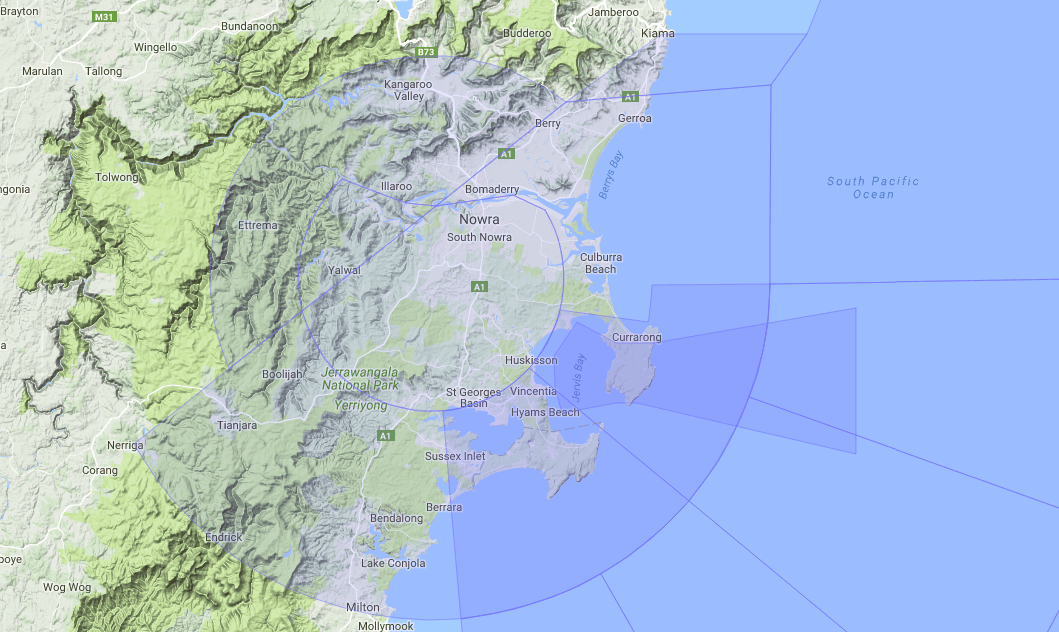
See the airfield? Yea, that’s military. I’ve drawn a measurement line out from the eastern approach to the 5.5km distance. Imagine a circle with a 5.5km radius with its origin at the airfield and you can easily see that the vast majority of Booderee falls well within the 5.5km exclusion zone.
The other issue is that, thanks to the airfield in Booderee and the one at HMAS Albatross at Nowra Hill, the park is right at the centre of a large block of restricted airspace. Take a look at the map below:See the purple area? Yea, that’s restricted airspace. It has its centre at Albatross, but extends north up to Kiama and south as far as Milton. It also includes, as you can see, all of Jervis Bay, Sussex Inlet and Lake Conjola. You cannot fly a drone within this airspace between 8:30am and 11:00pm from Monday to Thursday and from 8:30am to 12:00pm (lunchtime) on Fridays. In other words you can fly until a little bit after sunrise any day of the week, after lunch on Fridays and all weekend. You can also apply to fly in the airspace outside of those times by emailing the tower at 453sqnnwaflt.ops@defence.gov.au with at least 10 business days prior notice. If you do email them, make sure you give as much detail as possible, such as exact location(s), the maximum height you’ll be flying at and the times you intend to fly.
Yep, it really does suck. However it sucks more when us locals observe the laws governing drone use, while visitors to the area do not, whether deliberately or because they are ignorant of them. I’ve lived here for 12 years and I finally got to fly my drone in Booderee for one single day recently. Thanks to the Adventure Race Series that took place in the park, special permissions were granted and the airspace was cleared so that the race organisers could film proceedings with their drones. So for one day there was a drone amnesty and I finally got to fly at Greenpatch, Hole in the Wall and Murrays. Given the way society looks at drones, which is to say that they don’t have a very good reputation, it is unlikely that any of the above regulations will be relaxed any time soon. Ignorance of the law is, as any lawyer will tell you, no defence.
My drone is awesome, one of the best photographic tools I’ve ever bought. But there are a couple of things I wish I’d known before I got my drone. They probably wouldn’t have put me off from buying one, but I might have gone into this photographic niche with my eyes fully open. So, for the benefit of those of you who have not taken to the skies yet, but are seriously considering it – here are the five things I really wish I’d known before-hand.


