Why I’ve Taken Over 15,000 Landscape Photographs in Just One Location
And have zero regrets
 Andy Hutchinson
12 min read
Andy Hutchinson
12 min read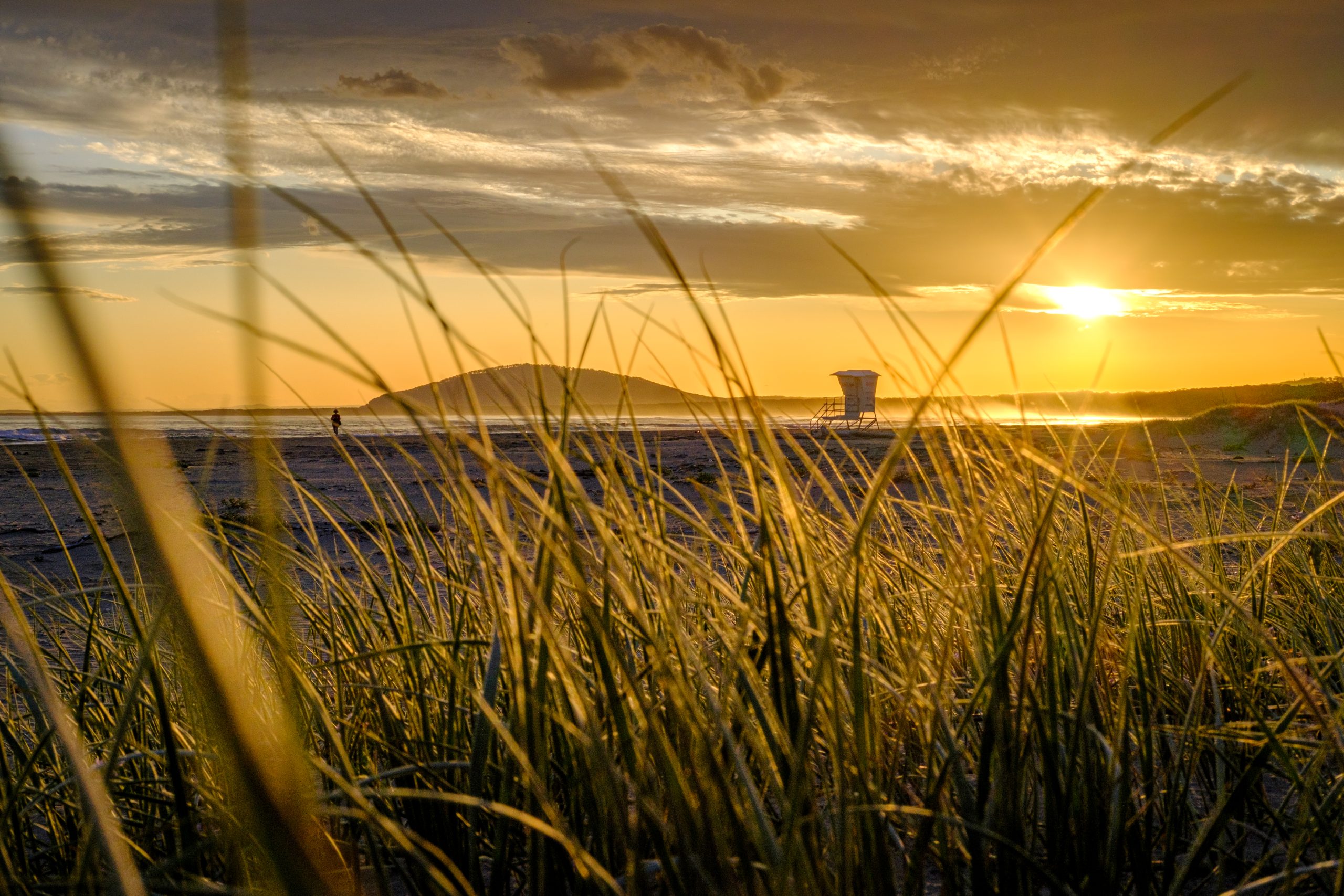
There are common elements linking the popular photography channels on YouTube which, rather than encouraging, can sometimes add to the frustrations felt by hobbyist photographers.
I’m not talking about the switching camera brand videos, the clickbaity ’plans for this channel’ videos with titles like “it’s over”, or even the shoot ‘like a pro’, frame ‘like a pro’, or focus ‘like a pro’ videos.
No, I’m talking about the travelogue nature of many of the videos. And the reason I suggest it’s frustrating is that most hobbyist photographers do not have the time, inclination or money available to explore a new location every weekend.
I understand why YouTubers (and photography content creators on other platforms) do this of course – they want to keep things fresh and visiting a different location in every video affords them the opportunity to explore different photographic themes, styles and environments. The logic is sound.
But if you’re not making YouTube videos and aren’t creating content designed to please an algorithm, then you really shouldn’t feel like you have to go somewhere new every time you get a little photographic itch. Down there.
I put it to you that there is absolutely nothing wrong with going to the same place again and again and I’m going to, hopefully, prove that point with a selection of the 15,000 or so photos I’ve taken in one just location.
Albert Einstein once said that “Insanity is doing the same thing over and over again and expecting different results.” Clearly he never had to wait for the right light!
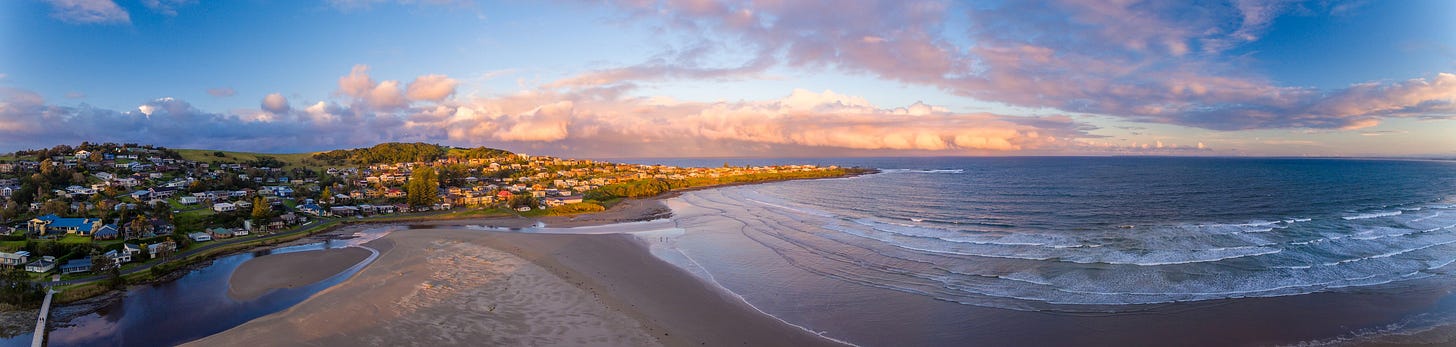
The Australian Vista
The very first time I visited Australia, a couple of decades ago, we drove south from Sydney on the back-roads that hug the coastline. The views are sensational at numerous points along the way on that trip, but I think cresting the hill at Gerroa is the best of them all.
Seven Mile Beach stretches off into the distance in a long lazy arc of wide sand and dense bush, flanked by Mount Cullunghutti, with the headlands at Culburra, Currarong and the heads of Jervis Bay all visible in the far distance on a good day.
Little did I know, the first time I saw that view, that it would become a photographic home-from-home for me – a location that I would return to again and again, camera in hand.
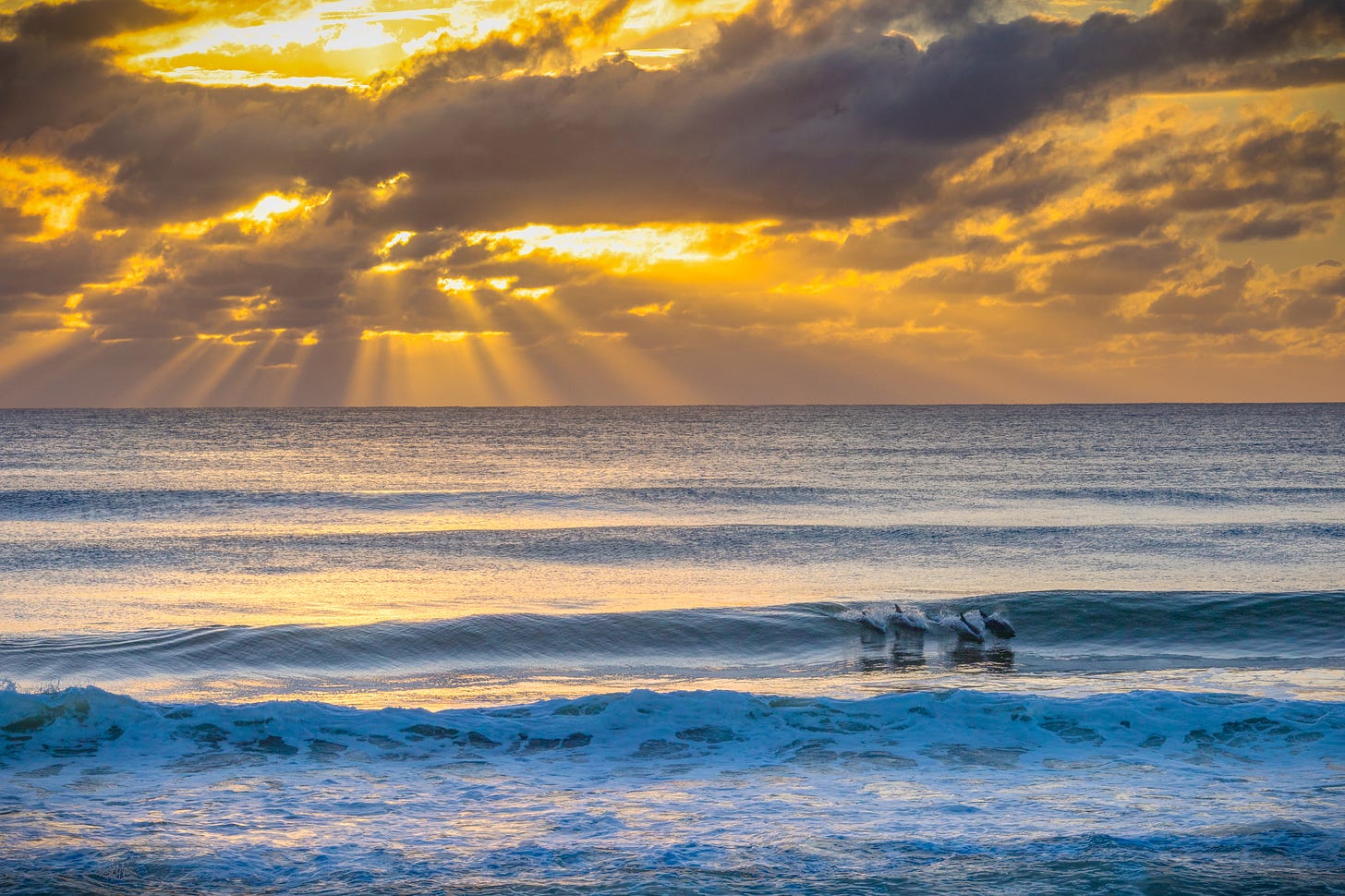
I’m lucky to have a location like this right on my doorstep and I never tire of it because it’s in a constant state of flux – ever-changing, always fresh, always challenging me.
I’ve taken over 15,000 photographs in this one location and they most definitely do not all look the same. So if you’re restricted to a neighbourhood photo spot and worry that your photographs are getting samey, here’s how I use the environment and my equipment to keep it fresh.
Before we get into it, I should point out that every single photograph in this video was taken within an area spanning just 500 meters.
The Light Fantastic
The light is always changing at Gerroa. There’s nothing unique about it in that regard, the light is always changing everywhere, but I cannot overemphasis enough how crucial that ever-changing light is for keeping my photography fresh.
Yes, there’s are the colour extravaganzas you get at either end of the day and while I’m a huge fan of saturated skies, that’s not all that I’m talking about.
The light changes so drastically and shifts so much up and down that kelvin colour temperature scale that it often feels like I’m photographing an entirely different location.
You get those days when the colour temperature is cool and the beach takes on a steel-like appearance. You get days when the light only makes the briefest of appearances, perhaps illuminating a cloud, you get days when the light makes colours pastel-toned.
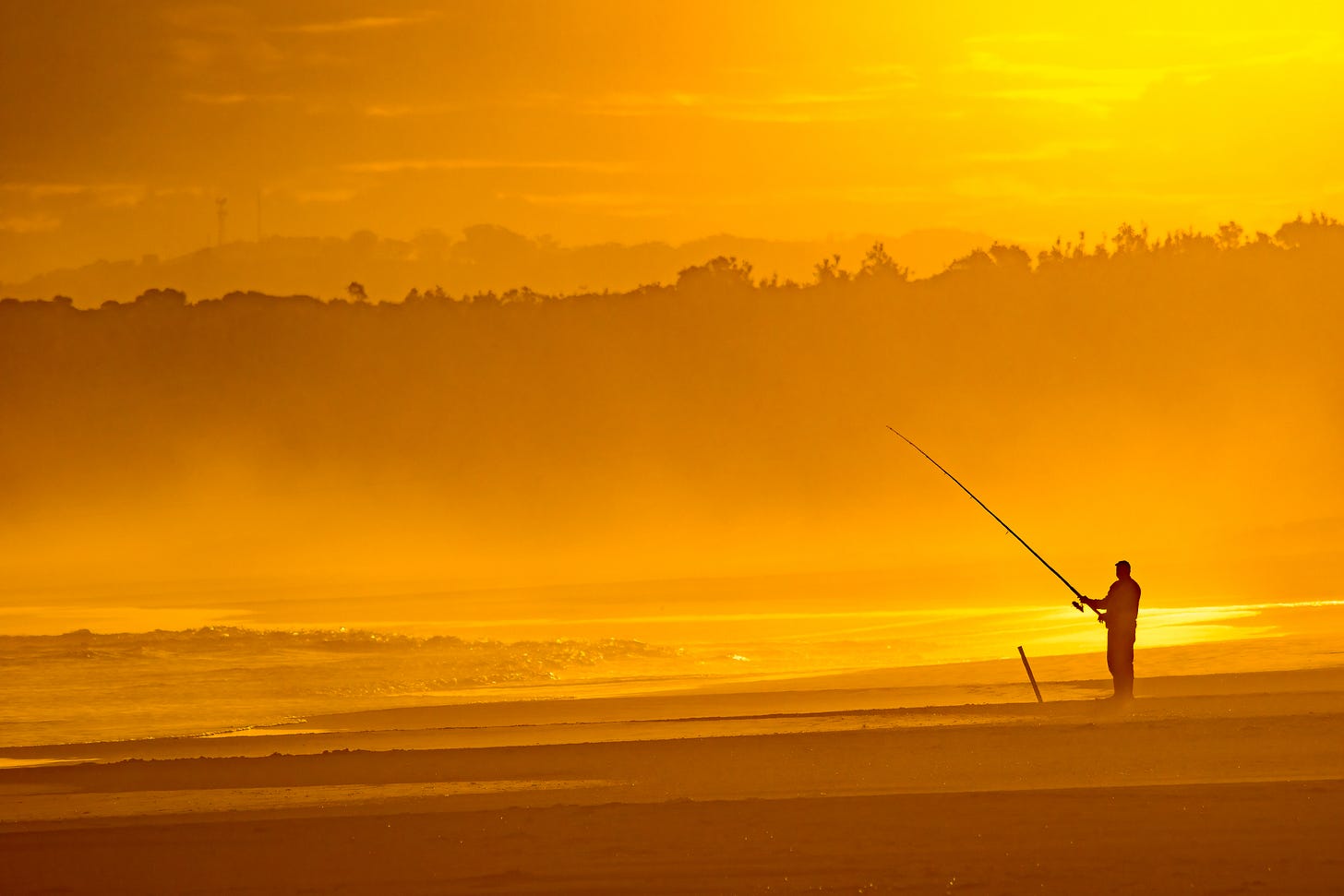
There are single-colour days when the skies are clear and a big sun saturates the entire beach in a vibrant orange glow and there are days when the clouds and the beach takes on an almost malevolent mood.
We the People
Seven Mile Beach is no Bondi. It gets busy in the summer months, sure, but for most of the year it has sporadic visitor numbers and often I find myself the only person on the beach.
But I love shooting the beach life here. It’s akin to street photography in that you’re catching unguarded fleeting moments that would otherwise go completely unnoticed and unrecorded.
It’s a popular surfing beach and I love capturing the surfers with my big 100-400mm lens. Due to the beach’s curved shape, I can shoot across the water and photograph the surfers side-on, which makes for much more dramatic shots.
One of the local surf schools operates about 1km south down the beach and the groms carrying their boards to and from the beach and learning to surf the waves always make for an interesting subject.
Being located an easy two hour drive south of Sydney, Gerroa gets lots of families enjoying some time away from the city and some of my favourite shots are of those families enjoying the beach.
Whether it’s a group walking down the beach, friends taking selfies, mum or dad towing the kids on boogie boards, or people out for an evening constitutional, they make for great photographic subjects.
It’s no secret that most fishermen or women don’t actually care if they catch a fish – they’re enjoying a bit of peace and quiet in their own heads. And you can often get a sense of that when you point a lens at them and capture them going through the routines – baiting the line, casting, of most importantly, waiting.
Four Seasons
The changing seasons have a huge part to play in the varied landscape of my local beach, not least of course because of the shortening and lengthening days in winter and summer and the amount of time I get to spend out there with my camera.
The beach takes on an entirely different atmosphere in the winter that would, I’m sure, seem alien to the families that only ever visit during the school summer holidays.
It’s a harsher place, and obviously a colder place, but there’s a totally different feel to it, perhaps because it’s mainly locals that are left but mainly I think because it’s often nearly deserted.
In the summer the atmosphere resembles one big party and I hope that comes through in the photographs I take at that time of the year. The freedom people experience being in such a stunning location during their precious free time is of course evident in their behaviour.
Whatever the Weather
When you live on the coast the weather comes through unfiltered and at full bandwidth. Weather systems in this part of the world usually originate over the ocean and it means you get to experience that weather before it’s been modified by the landscape or buildings.
Cyclonic weather systems bring wind and rain to the beach and some of my most dramatic shots have been taken as the edges of a system, formed in the Pacific, makes first contact with the land.
Wind that’s blowing onshore spins up big surf and those waves make for dramatic subjects, particularly as the sun is setting and lighting up the crests of the waves.
Wind that’s blowing offshore smooths the swell out and you often get these almost eerie flat oceans with just the smallest of waves trickling onto the beach.
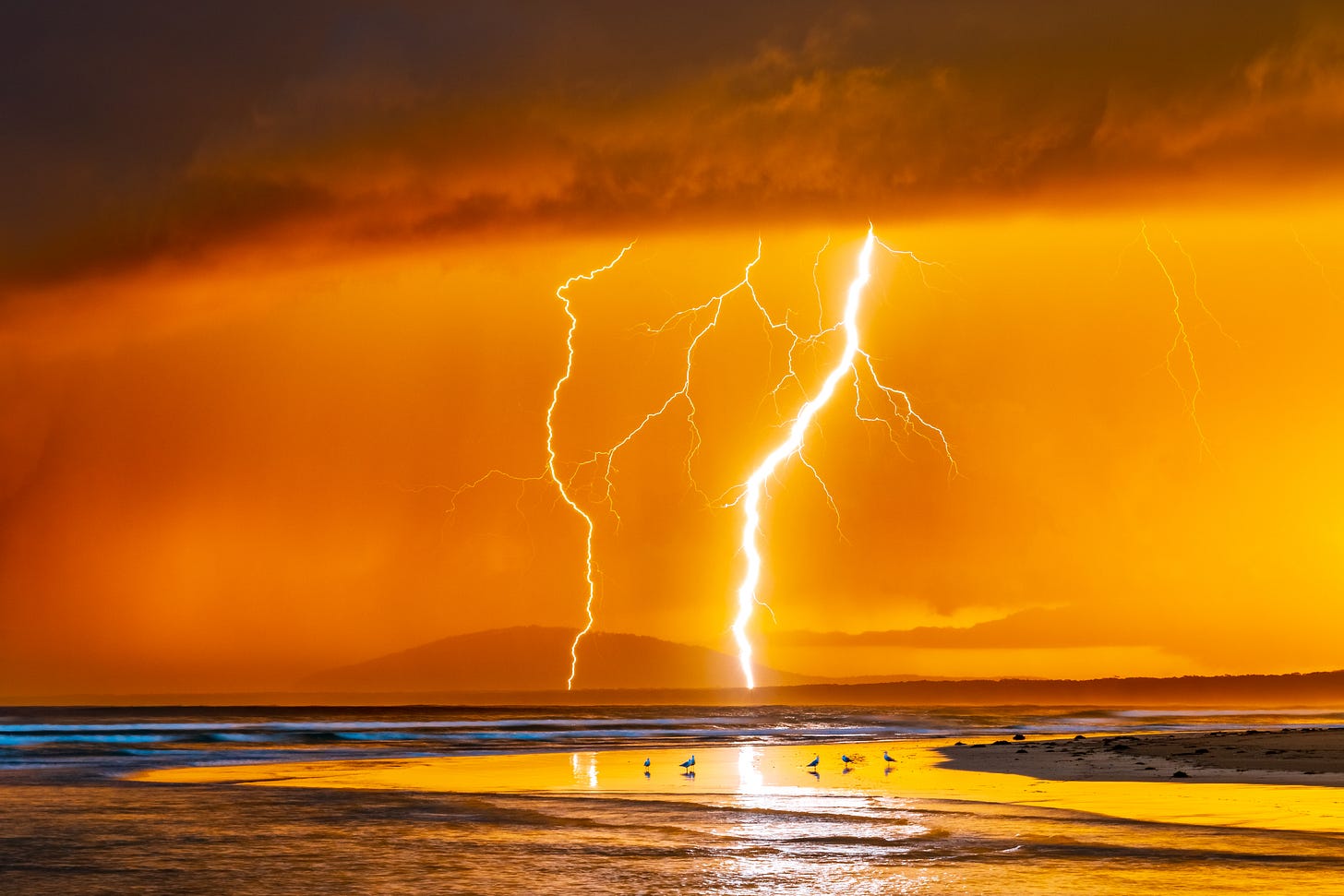
Thunderstorms are, of course, an incredible subject and I’ve been lucky enough to capture a few amazing ones at Gerroa.
My favourite photograph of all time was taken during a punchy little electrical storm that moved northwards along Seven Mile Beach right on sunset one summer’s night a few years ago.
There was a lot of lightning and I was the only person on the beach there to photograph its approach. I got a series of incredible photos which required very little post-processing.
The weather doesn’t have to be dramatic of course, when it’s humid and there’s some moisture in the air you get sea haze which makes for an atmospheric scene. Bottom line is that there is no such thing as bad weather.
Wild About Wildlife
It’s not just humans on Seven Mile Beach of course, we share the place with critters on the land, in the ocean and in the air.
Quite often the silver gulls congregate down near the mouth of little Crooked River and they make for entertaining subjects, particularly when there’s some great reflections in the sand.
I love photographing those gulls and often spend some time inching around the back of them without spooking them to capture a shot of them with a nice sunset as the backdrop.
There’s several breeding pairs of Wedge-tailed sea eagles and there’s one in particular that always seemed to commute south down the beach at sunrise.
There’s no sudden drop-off at Seven Mile Beach which means we don’t get too many big ocean critters close to shore, but there are seals who feed off the rocky reefs on Black Head peninsula.
We do get whales close to shore occasionally and I’ve photographed dolphins enjoying a morning surf on a few occasions.
24 Hours a Day
Being on the east coast of Australia, it’s mainly sunrises here of course and actually, unless I fly the drone, Gerroa isn’t a great place to shoot the sunrise because the headland is in the way year-round.
However, one of the primary reasons I’ve taken so many photographs in this one location is that it’s one of a select few spots on the east coast where you can photograph throughout the day and, most useful of all, shoot the sunset over the water.
The geography of Comerong Bay is such that you can position yourself between the setting sun and the ocean and photograph beautiful ocean sunsets with beach and bush-land into the bargain.
In fact in terms of geography and taking into account the fact that pretty much everything to the north of here is blocked to the west by the escarpment, it’s really only at Jervis Bay, Batemans Bay, Guerrilla Bay, Merimbula and Eden, all to the south, that you can shoot west across the ocean at sunset.
Believe it or not, in the 1930s they used to race cars on this beach. In fact in 1933 there was an attempt on the Australian land speed record here. Oh and the first trans-Tasman flight between Australian and New Zealand began here. None of that would have been possible but for the fact that Seven Mile Beach has an incredibly shallow profile.
That shallow beach profile, combined with that unique geography I mentioned, means you get incredible reflections in the sand at low tide.
Many of my favourite photographs taken on this beach were shot at low tide when there was a colourful sky and I scored some crazy reflections.
In fact it’s really only the middle of the day when I don’t regularly photograph Gerroa because the light’s much flatter and less interesting.
So, the light, the people, the environment, the season, the weather, the wildlife and the time of the day all make for a huge amount of variety in those areas that I, the photographer, have no control over whatsoever.
Composition Confluence
However there are also elements I do have control over and they help me further push the photographic possibilities in this one small location. One of the most useful of those elements is composition.
I love experimenting with the placement of the lens and seeing what I can get away with. Changing the height at which I’m shooting, finding cool natural frames, playing with symmetry, gleefully ignoring the rule of thirds are all options I love playing with.
I don’t tend to think big thoughts about composition when I’m using my camera, I simply let the environment guide me while making a conscious effort to move and to seek out anything interesting that catches my eye.
Life Through a Lens
Typically speaking I always take three lenses to Gerroa – a 10-24mm super-wide, a 50mm prime and a 100-400mm telephoto.
I’m not afraid to regularly switch them out when an interesting photographic opportunity presents itself because I think we photographers often just stick with whatever lens we have on the camera at the time, to the detriment of interesting photographs.
The big telephoto is ideal for aiming down the beach to shoot the candid street style photos of beachgoers silhouetted by the sun. But it’s also great as a straight landscape lens – isolating specific parts of a scene that would otherwise be fairly insignificant in a larger frame.
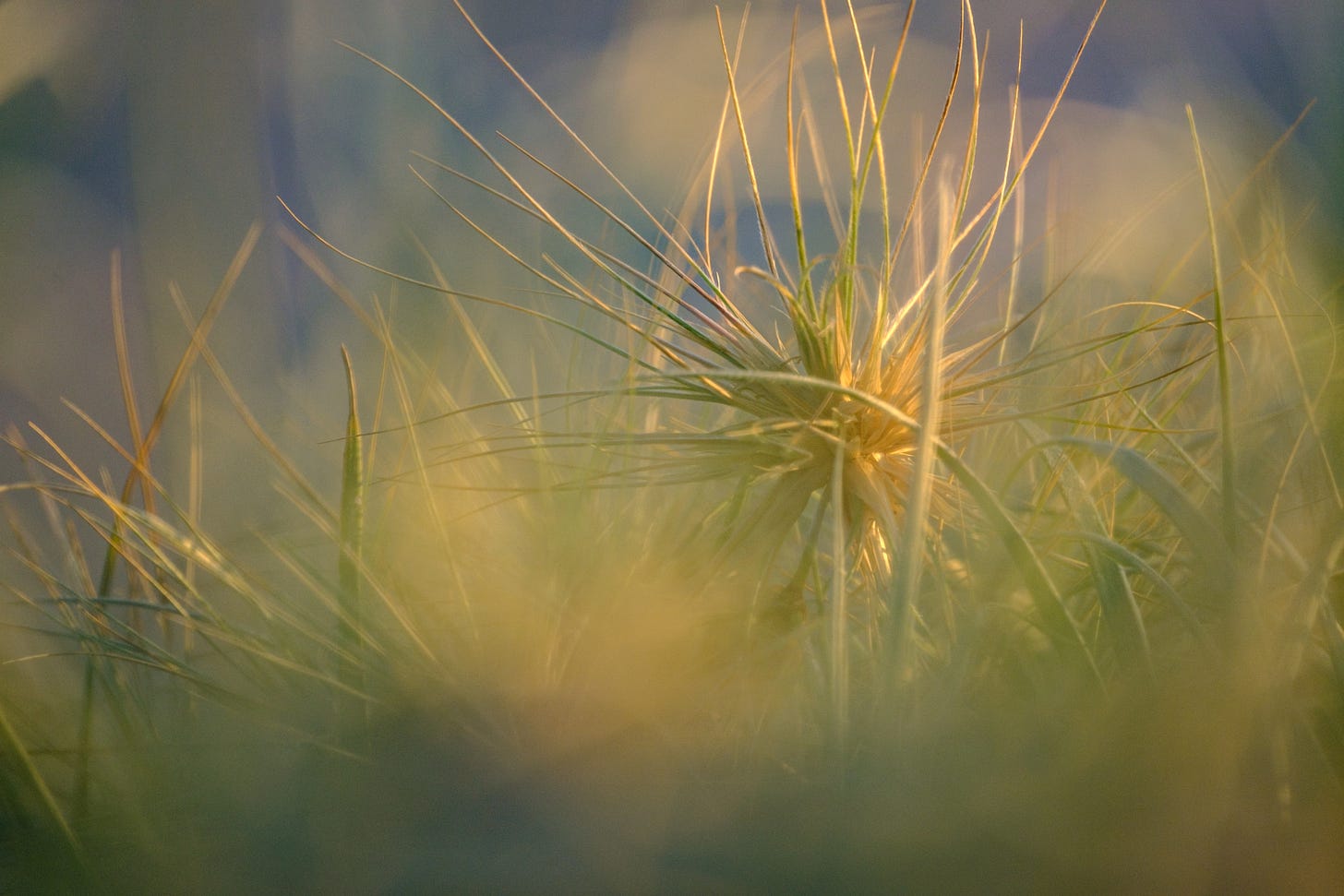
The 50mm prime has a f/2 aperture and I love using this to shoot very close-up – almost macro close – and completely blowing out the background. I shoot through the dune grass, at the shells on the beach and I also use it as a straight landscape lens when I want a more condensed view than the superwide affords.
But the super-wide is the lens I use most often to capture the scale of the landscape at the beach.
On Camera
And finally the other variable I can control is the camera I’m using. Most of the time that is my Fujifilm X-T4 which I absolutely love.
I often use my iPhone to create test panoramas before shooting them on the X-T4 and quite often those iPhone photos are among my favourites from the shoot.
My other camera is the Hasselblad attached to the front of my DJI Mavic 2 Pro drone.
Being able to put a professional grade camera up in the sky is, of course, a game-changer and I remember well the thrill of shooting landscapes for the first time with my original drone – a Phantom 3.
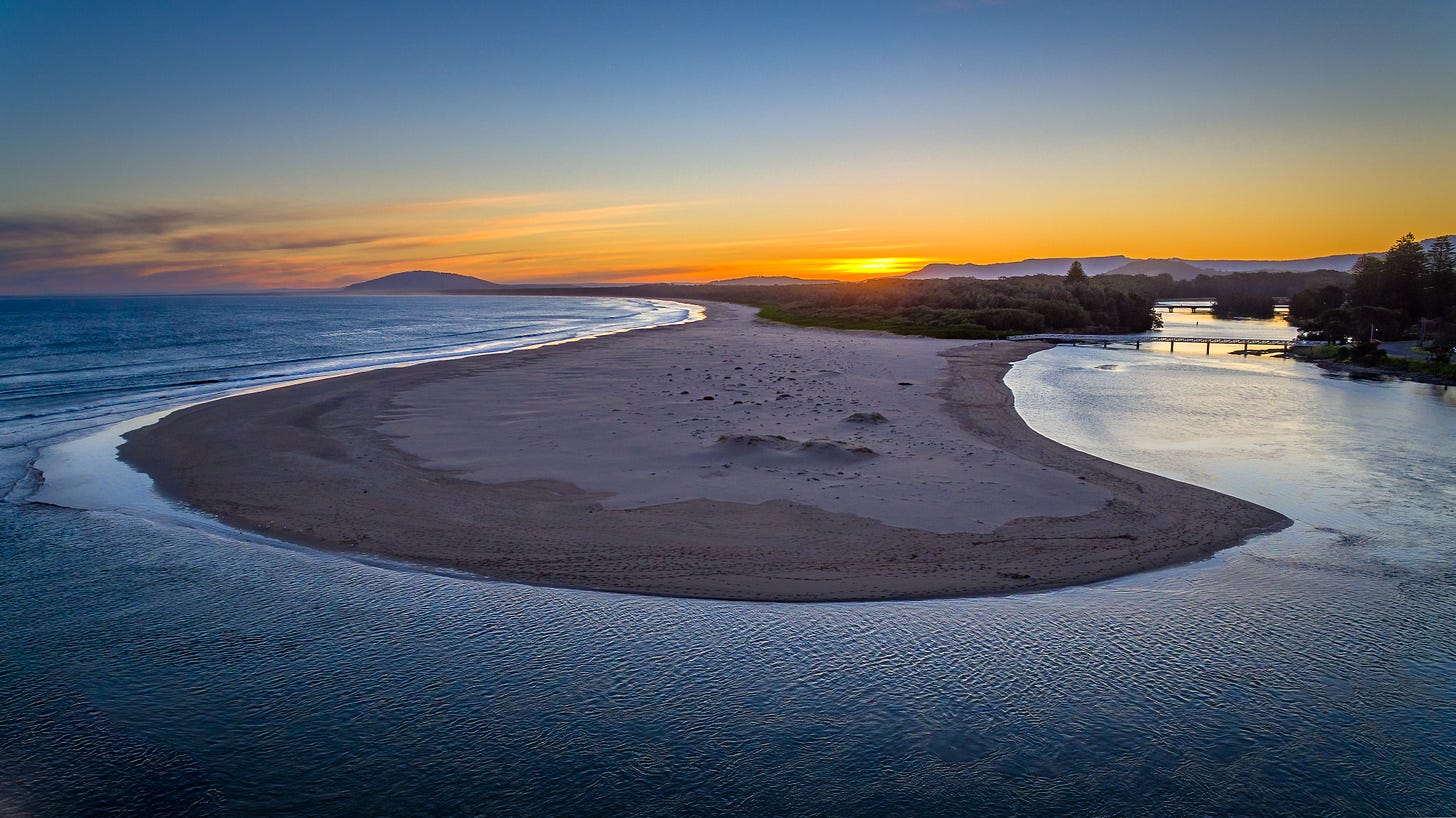
It goes without saying that shooting aerial photographs offers a wide range of new perspectives, but what it also does is remove the limitations imposed on you by the geography.
I mentioned earlier that Gerroa isn’t much use for sunrise because the headland blocks the rising sun year-round. That isn’t an issue if you have a drone.
If I know we’re due for strong sunset colours then I’ll charge up the drone’s batteries and take it to the beach. I do find it hard to put the X-T4 away, but getting a camera up in the sky affords so many opportunities for variety.
In particular I love shooting panaromas with my Mavic at Gerroa because you get a much fuller and complete sense of the place when you can see the horizon in full from east to west.
15,000 and counting
And that is why and how I’ve taken 15,000 photographs in the same location. I hope this has given you some ideas on how to keep things fresh at your local spot.
I realise I’m very lucky to have somewhere like Gerroa on my doorstep. Some locations do lend themselves well to repeated visits and some do not. I was brought up in North London so believe me, I understand.
But if there is a nice location near to you that you can easily access on a regular basis, then go there as often as you like.
If you visit at different times of the day and of the year. If you experiment with the subjects. If you try out different compositions, cameras and lenses – then the photos can look fresh every single time.
Be guided by the scene and the environment, don’t be afraid to experiment and enjoy the process of photographing this ever-changing planet of ours.
Also published in RAW & Unfiltered on Substack.