The Tactical Geek L3 Pro: An Excellent Mid-Size Every Day Carry for Cameras or Whatever …
The sling-bag obsession continues.
 Andy Hutchinson
10 min read
Andy Hutchinson
10 min read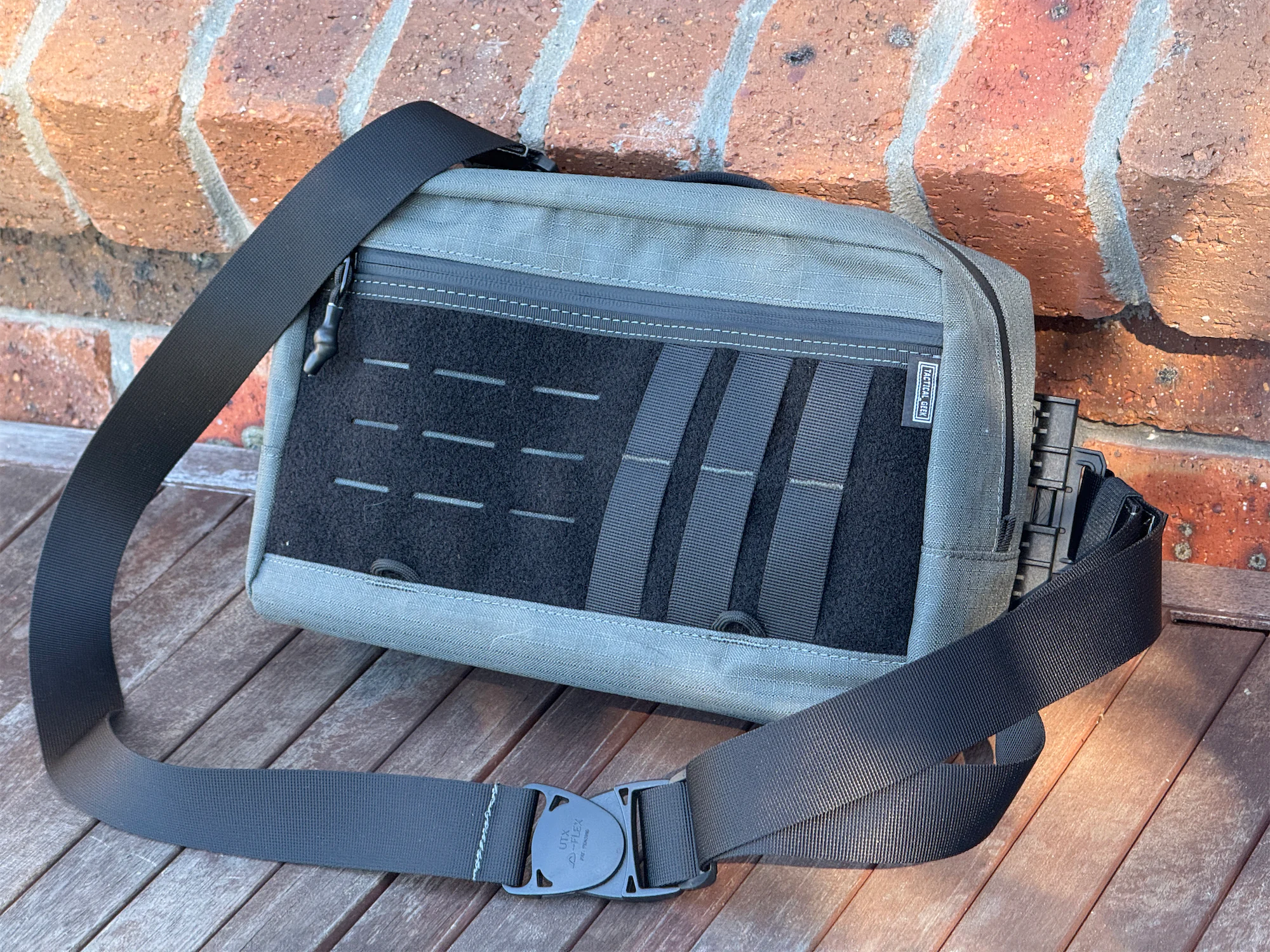
W
elcome back to the latest edition of ‘bag quest’ in which a plucky photographer continues his humbling journey to find the perfect back or shoulder mounted mobile storage solution for his camera gear. Today we’re looking at a slimline sling for the urban go-getter – a customisable tote for street photographers, urban explorers, lovers of liminal spaces, landscape shooters with light load-outs and influencers snapping smashed avo breakfast bagels at achingly trendy cafes.
Brought to you by Tactical Geek, the L3 Pro is marketed as the bag for wherever the day takes you – even if that’s explaining to security guards why you and your mate Geoff are photographing empty car parks at 3AM.
The Small Print
The folks at Tactical Geek reached out and asked if I’d like to take a look at their bag (so new it’s still on Kickstarter) and since I’m still getting over the disappointment of my recently purchased Wandrd Rogue Sling, I said I’d love to have a look at it. They sent it to me, but as per my no-shill policy, they’ve had no input on this review whatsoever – they’re not sponsoring this piece and I’m not a member of their affiliate scheme.
The Outside
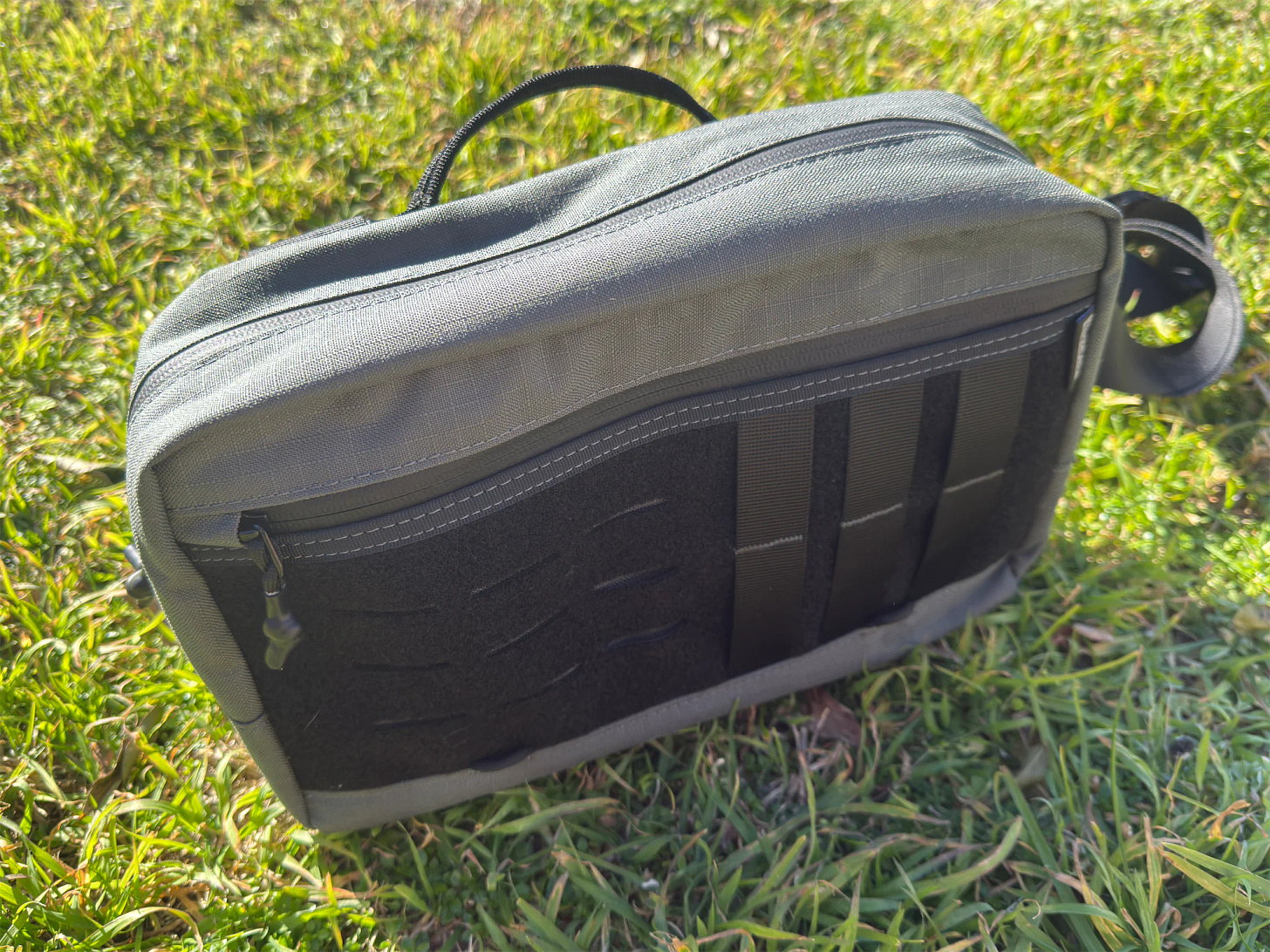
When I unpacked the L3 Pro, first impressions were strong. It’s a good looking bag that clearly emphasises practical usage rather than quirky design decisions, and as someone who’s still getting over their purchase of the Wandrd Rogue Sling, I’m all down for non-quirky design decisions.
The exterior is made from XPac® T500 Ripstop fabric, which is waterproof and has a nice kind of waxy feel to it with this neat, subtle check pattern stitched into it. I googled that incidentally and it turns out the check pattern is the ‘ripstop’ bit – it’s a grid of thicker yarns stitched into the fabric which helps stop tearing. There you go, you learn something new every day.
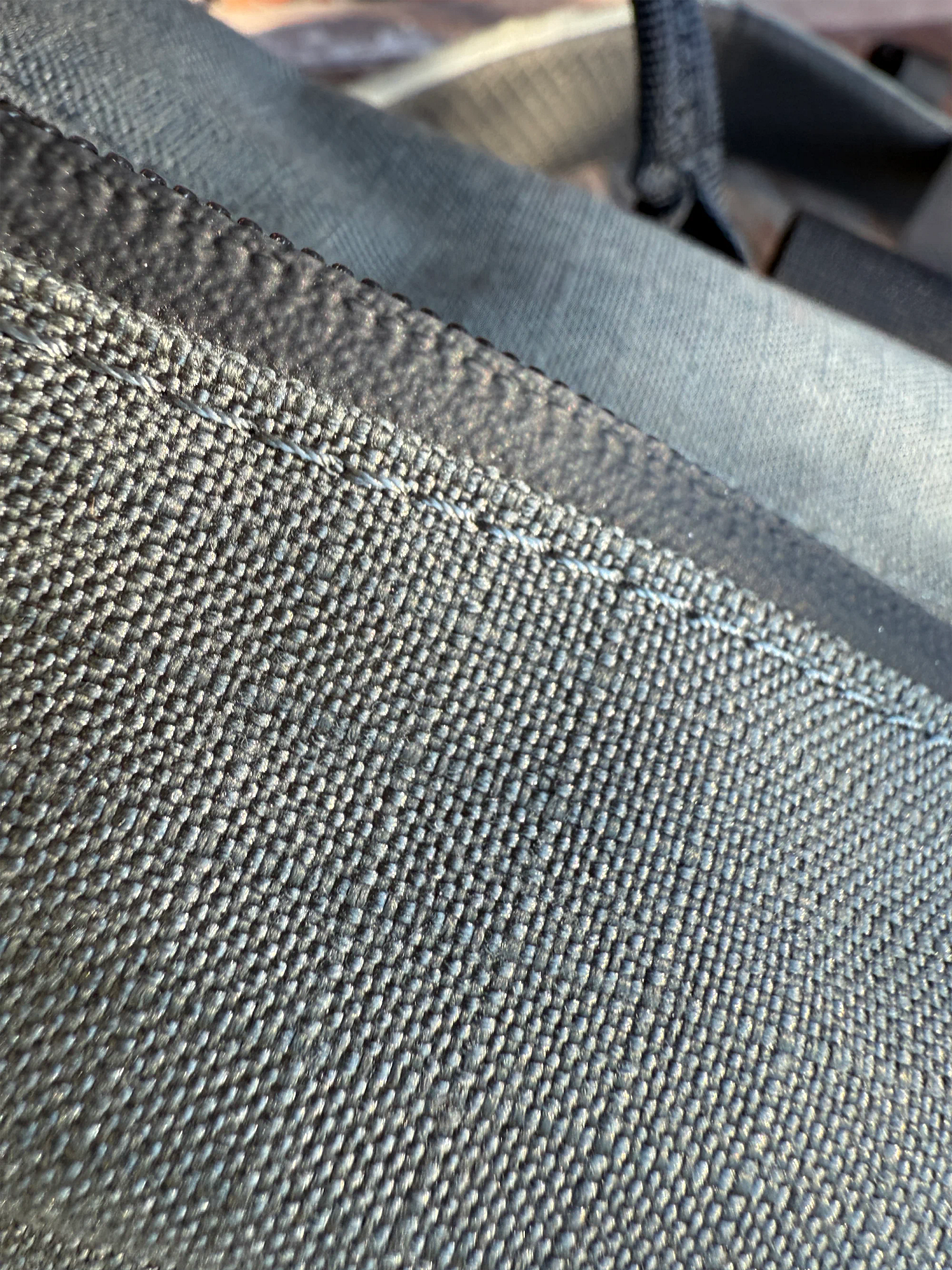
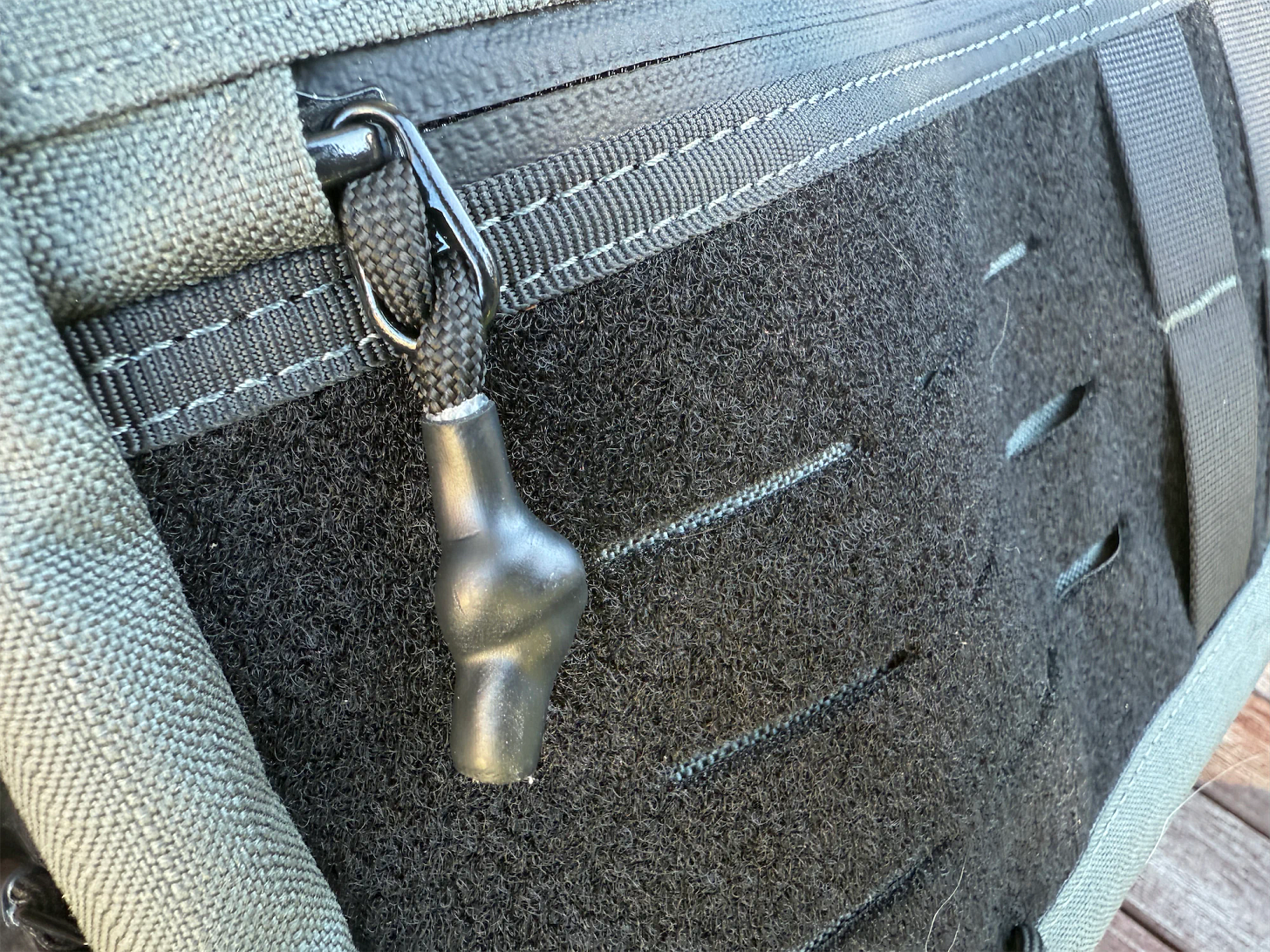
The zippers are the good stuff – YKK – and I really like the heat-shrink wrapped ends on the zips which makes them much easier to grip, particularly if the bag’s really full. Let’s be real here for a second: the ease with which a zipper works on a camera bag is much more important than bollocks like the number of RFID-screened pockets it has, because we photographers nearly always have to use those zippers one-handed on account of holding a camera. In fact, I’d put ‘ease of zipping’ right up there in the top three qualities I look for in a bag, alongside capacity and price tag.
On the front of the bag is loop fabric designed to accommodate decorative patches. Alright, look, I know I said I was down for non-quirky design, but I am prepared to accept geeky bling – I’m just sad they didn’t send me any patches with the bag. Next to that we have some Molle webbing that you can affix velcro attachments to, or carabiners, or simply tell anyone who asks that it’s your sergeant stripes. You do you.
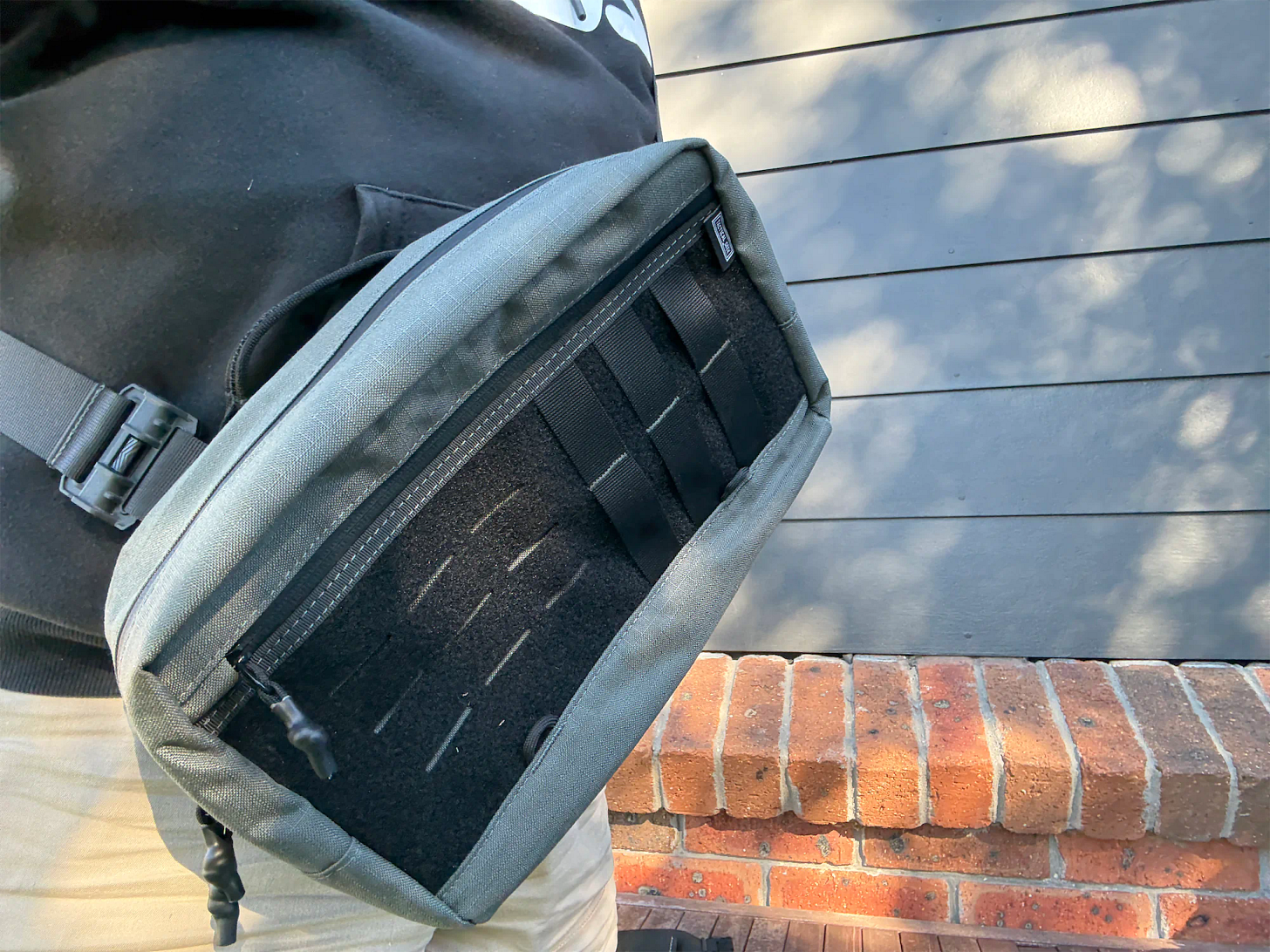
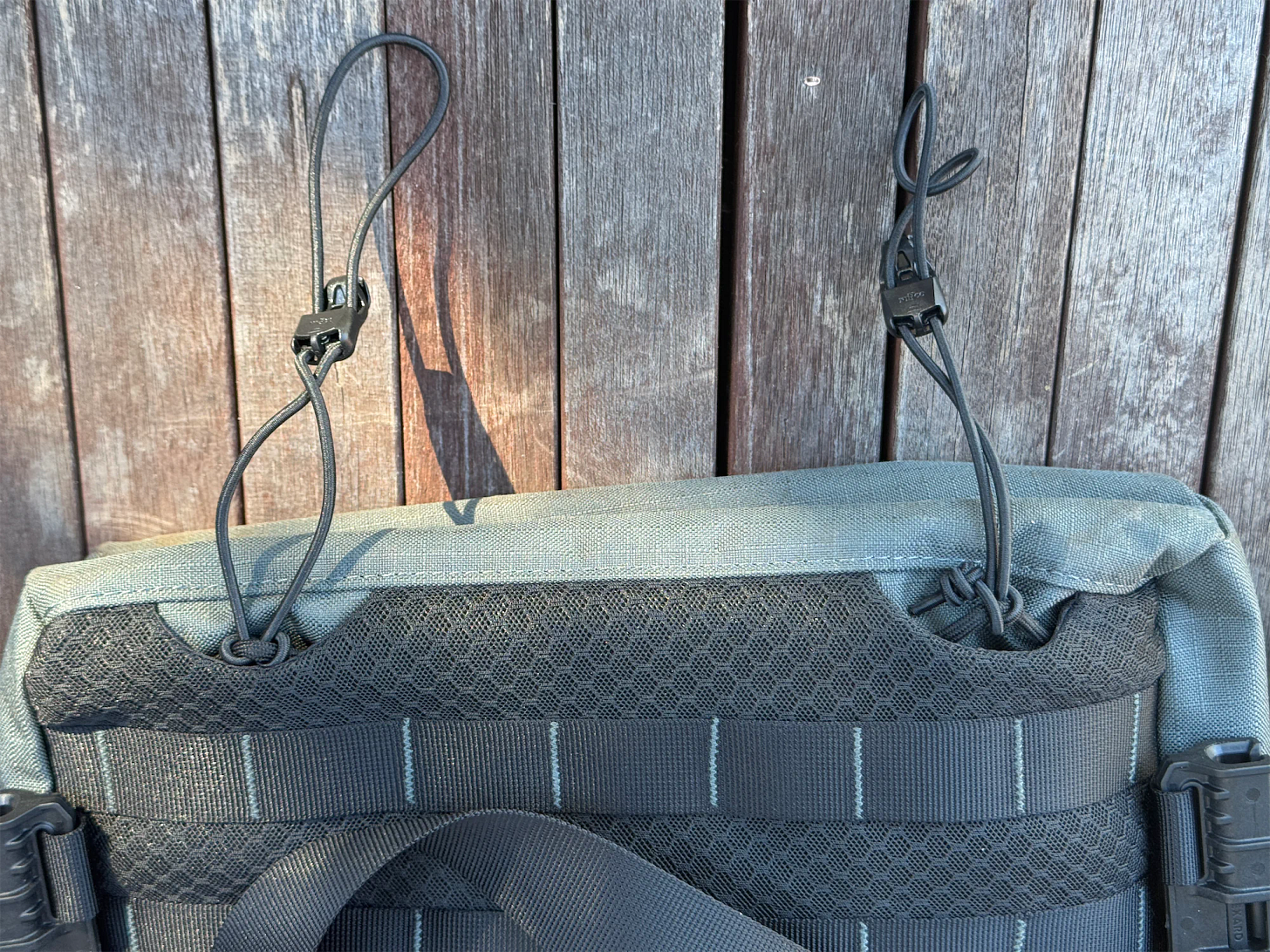
On the rear of the bag you’ll find a heap more Molle webbing, but since this is the part you’ll have on your back, I must admit to being confused as to its purpose. Anything you attach to this part will be in the small of your back – and therefore more uncomfortable than a night on a futon. In fact, I’d say it would be akin to storing your tripod down your trousers.
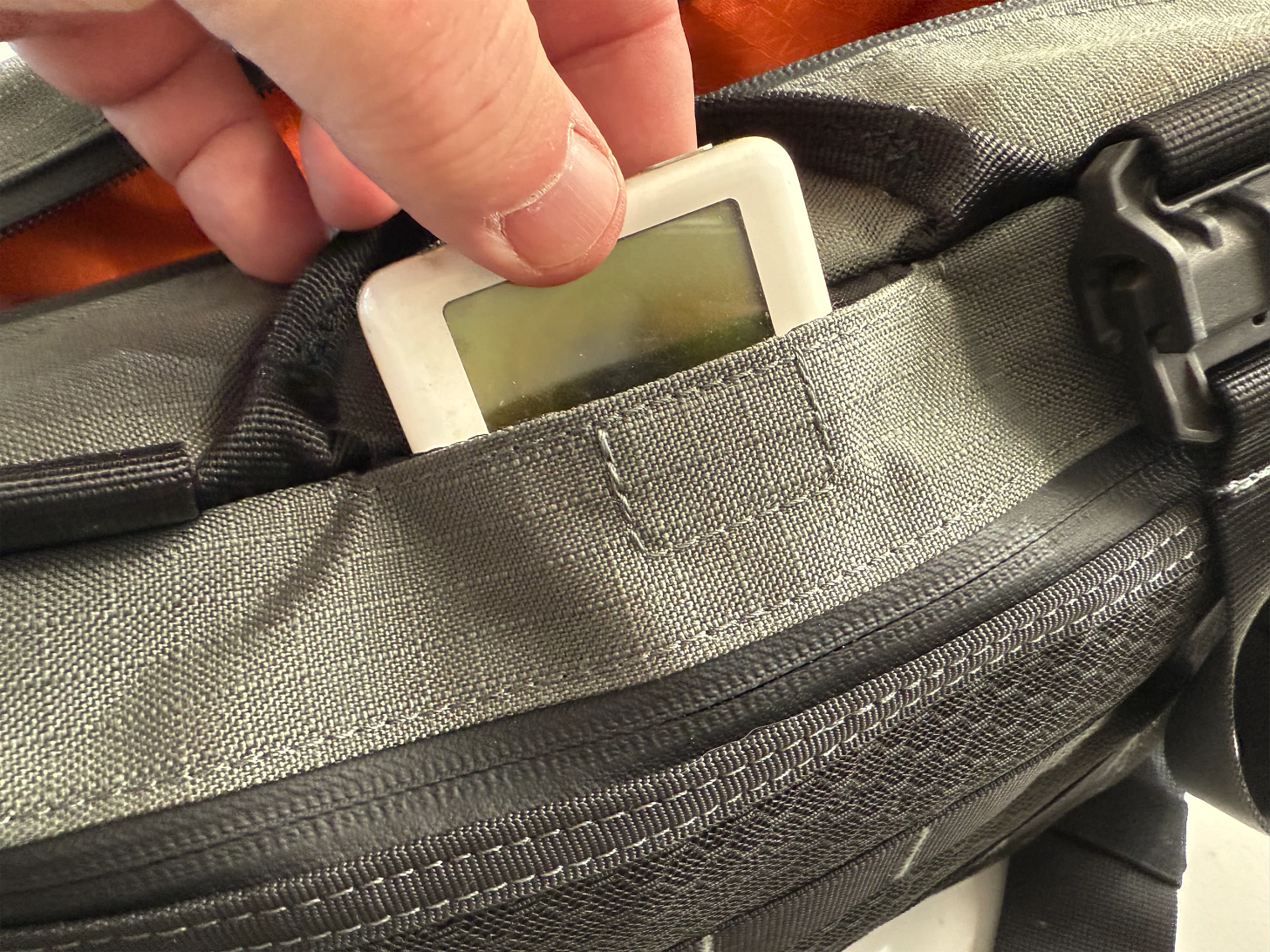
The front pocket is large and 12cm deep, but has a flap under the zip so you get nearly enough room to stand an iPhone 16 Pro Max on its end. That pocket is mirrored on the back but this one is slightly deeper and can fully accommodate an iPhone 16 Pro Max standing on its end. Since we’re using iPhone 16 Pro Max’s instead of bananas as our unit of measurement, I should mention the ‘secret’ phone pocket under the carry handle that easily swallowed said iPhone.
Handles and Straps
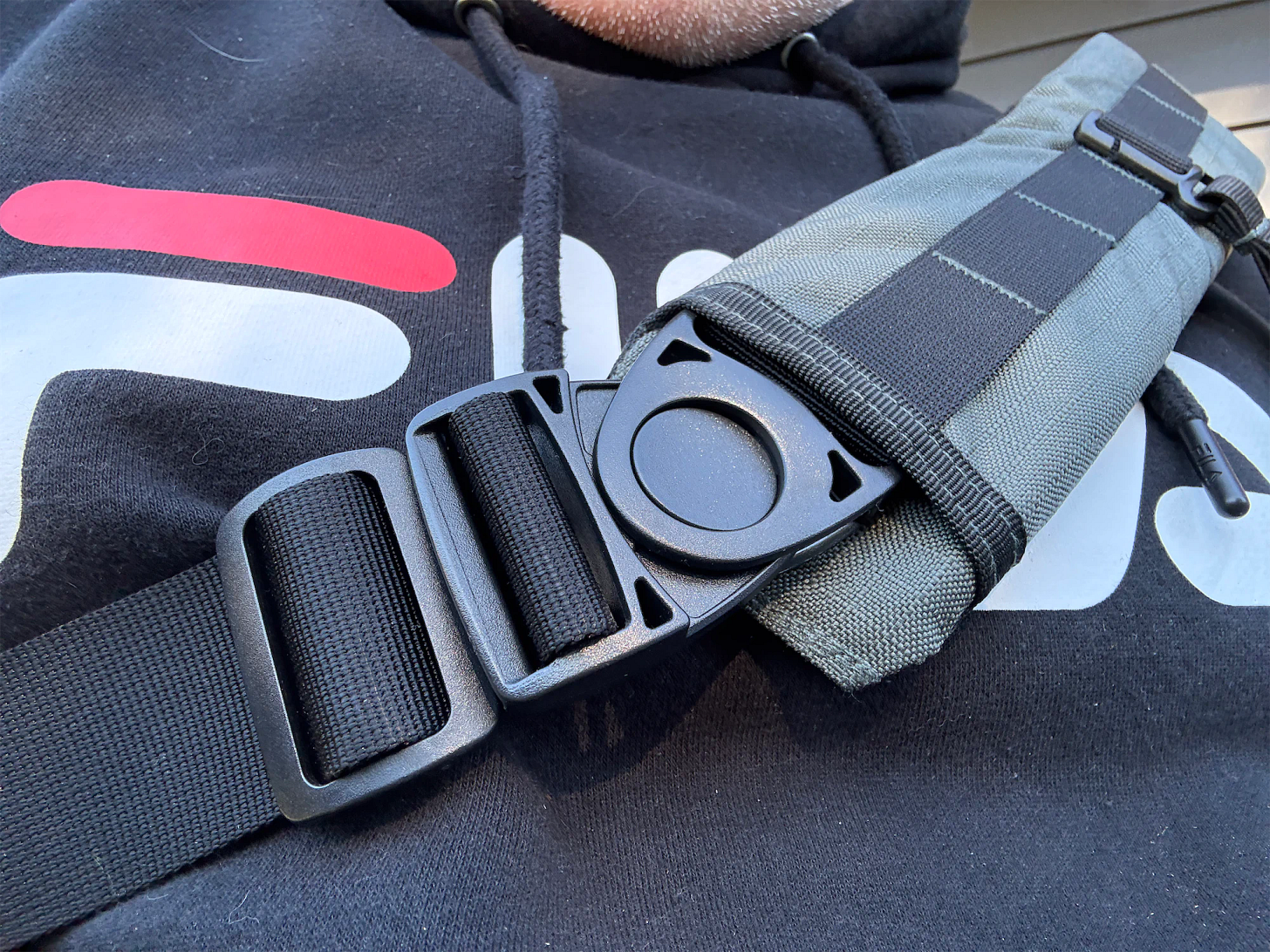
Before we get to the crucial innards, let’s talk handles and straps. Apart from the little carry handle on the top, the big feature is of course the highly configurable main strap. By switching the strap between the quick release buckles, it enables you to wear the bag as a sling, a shoulder bag or around your waist like an oversized fanny-pack (if you’re American) or bum-bag (if you’re British) – both of which definitions are of course hilarious to the citizens of the respective countries.
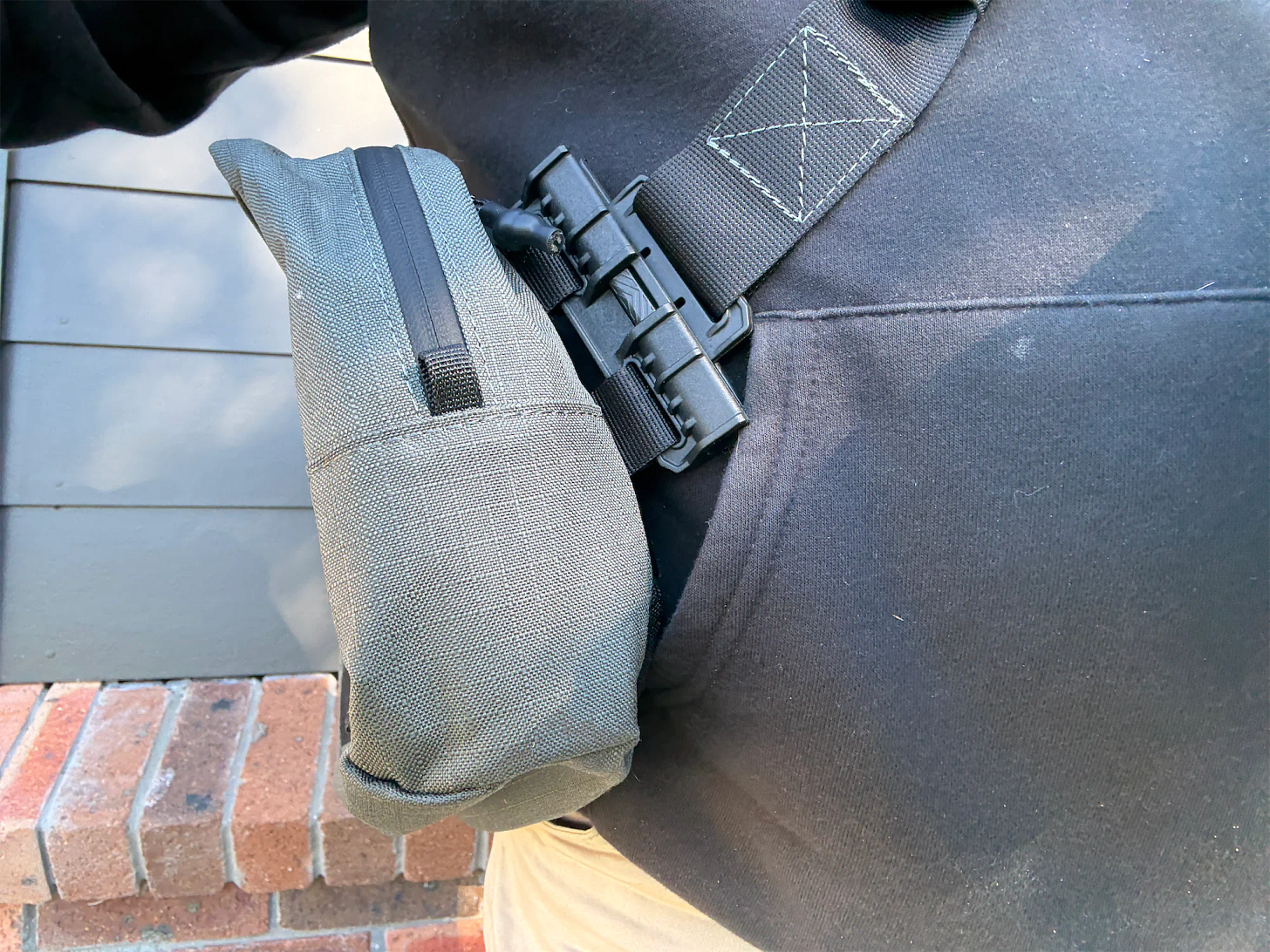
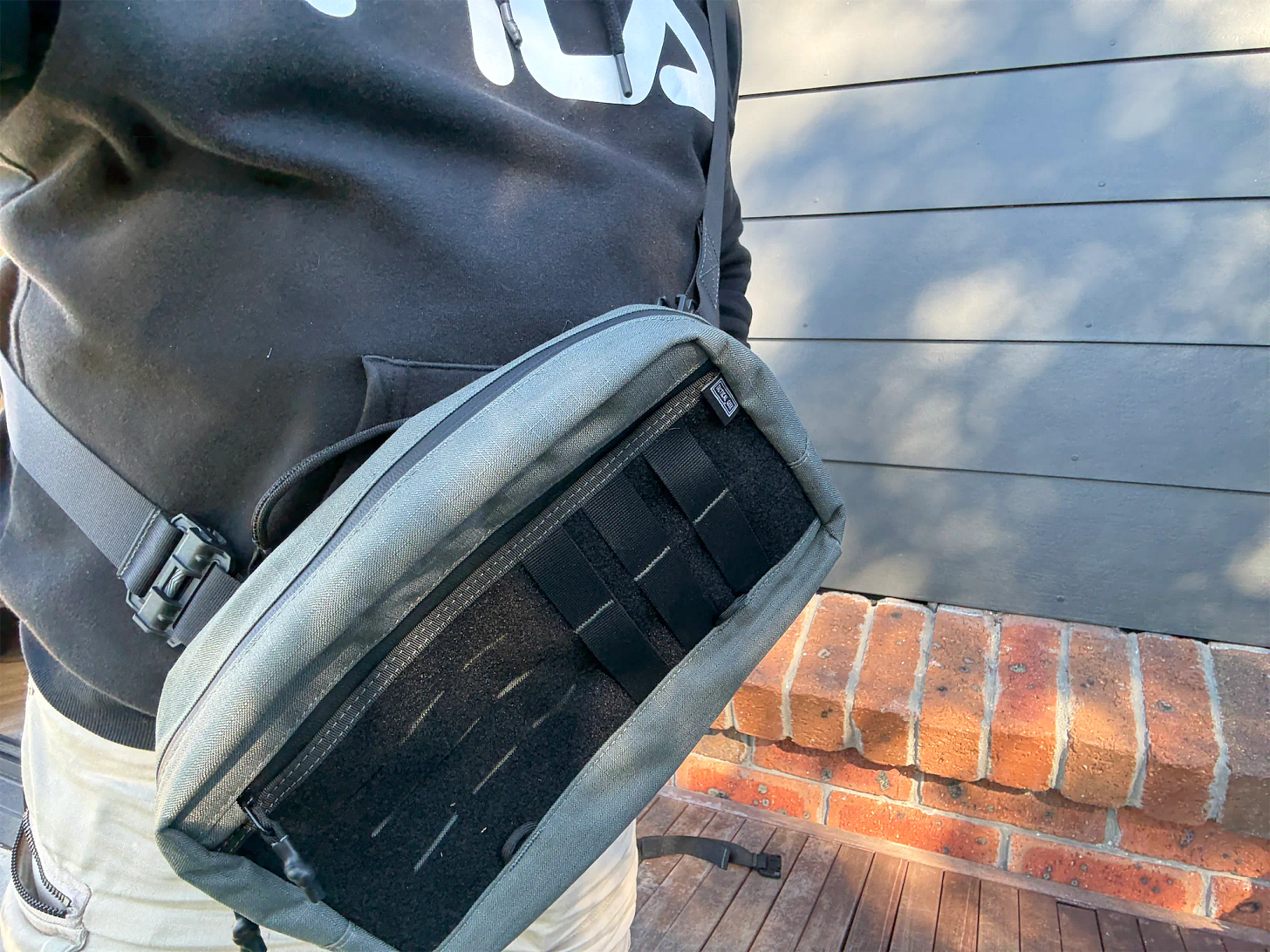
The bag comes with a chunky shoulder pad which is extremely well padded and, I must admit, was the first thing I removed. Even when fully loaded with camera and lens, the bag never felt heavy enough to warrant such chunky padding – unless you’re lugging dumbbells to do an impromptu weights session, or carrying gold bullion on your shoots, I just can’t see the point. The shoulder pad is easily removed and I found the bag far more useable using the main 4cm wide strap on its own. I mean, I’m still glad they included it, because (let’s be honest) if they hadn’t, the delicate-flowered crowd who bruise like peaches would be up in arms about it, so at least everyone’s got options this way.
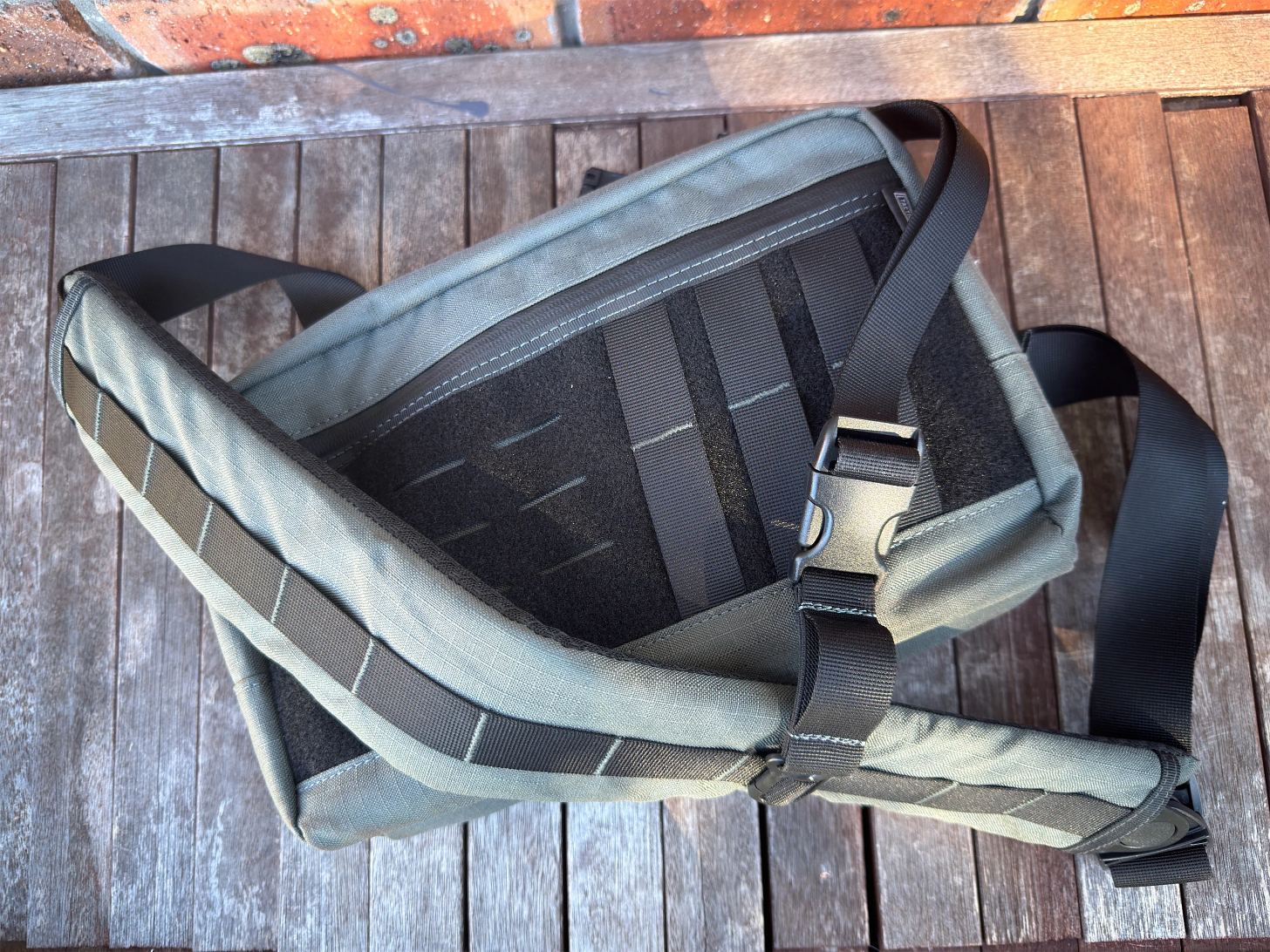
The length of the strap can be tweaked to sit high or low, but the version I got sent wasn’t a quick adjustable bag strap like you find on something like a Peak Design messenger bag. This is a bit of a pain because most of us walk about with the bag quite high up, situated in the small of our backs, and then lower it when we swing it round to the front to access our camera gear.
Note: Since they sent me the bag, Tactical Geek have updated their Kickstarter page and you can now opt for a quick adjust strap – while I obviously haven’t been able to test this, I strongly suggest you choose it if you decide to buy this bag.
The design is also such that when you do transfer it from back to front to access your gear, it sits at a slight angle, making it slightly less accessible. There is also a stabiliser strap which connects to the aforementioned shoulder pad and is designed to be used when you’re nimbly hopping between rocks on a coastal adventure on assignment for a lifestyle supplements brand. But since I’m about as nimble as a mahogany wardrobe, I added it to my box-of-bits-that-belong-to-bags where it will remain for eternity.
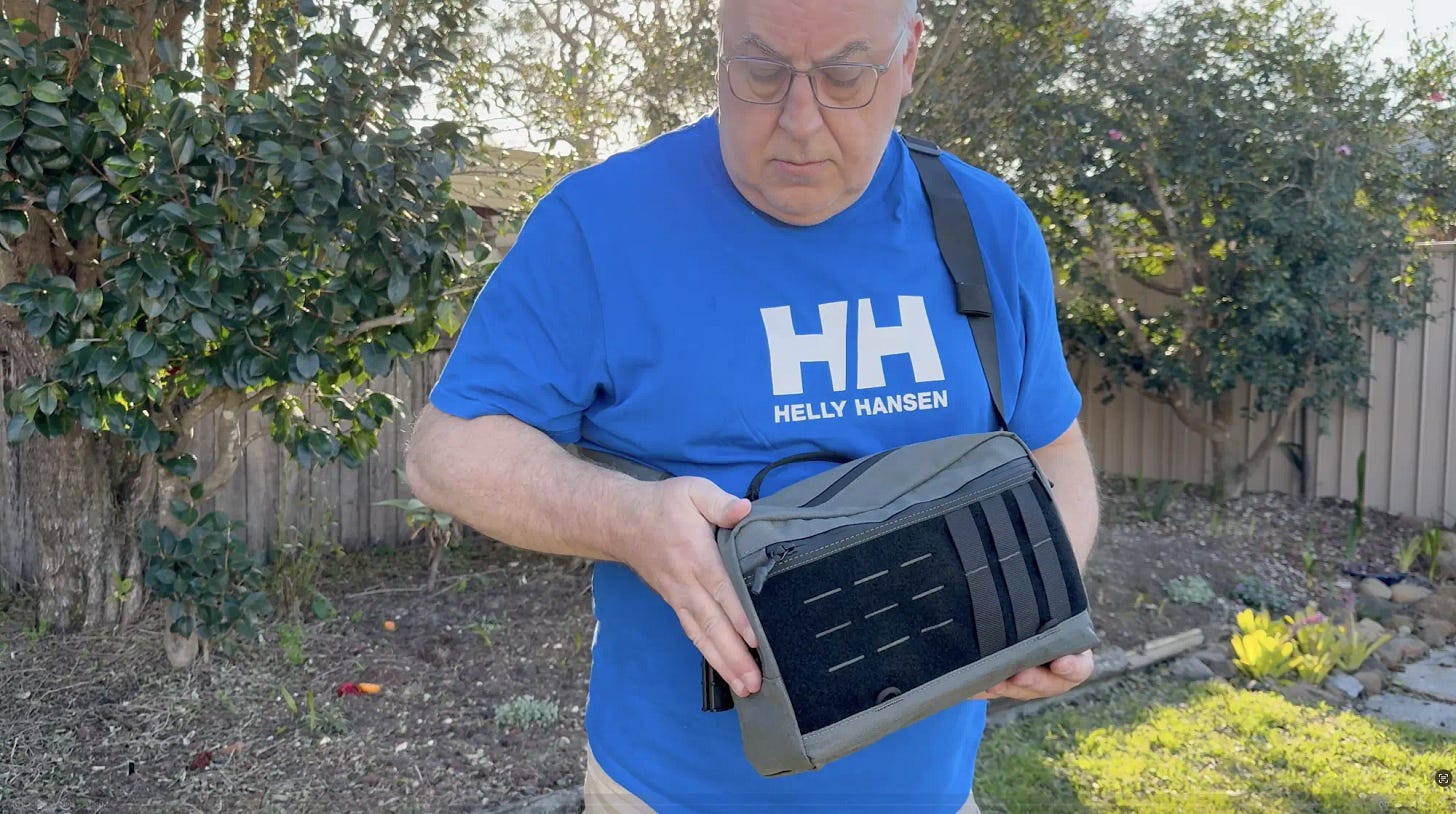
The two chunky main strap clips are twice the width of the strap itself and I can only assume that was an aesthetic decision made by the designer rather than a practical choice, because the top strap is a more appropriate size. In any case, those straps are nice and secure and it’s super-simple to remove the strap and adjust according to your required fit.
Finally, tucked away on the back are a couple of little recesses which cunningly hide an elastic cord carry system, enabling you to attach a tripod, coat or baguette to the base of the bag.
The Inside
All of which brings us to the interior, and there’s a lot to unpack here. See what I did there?
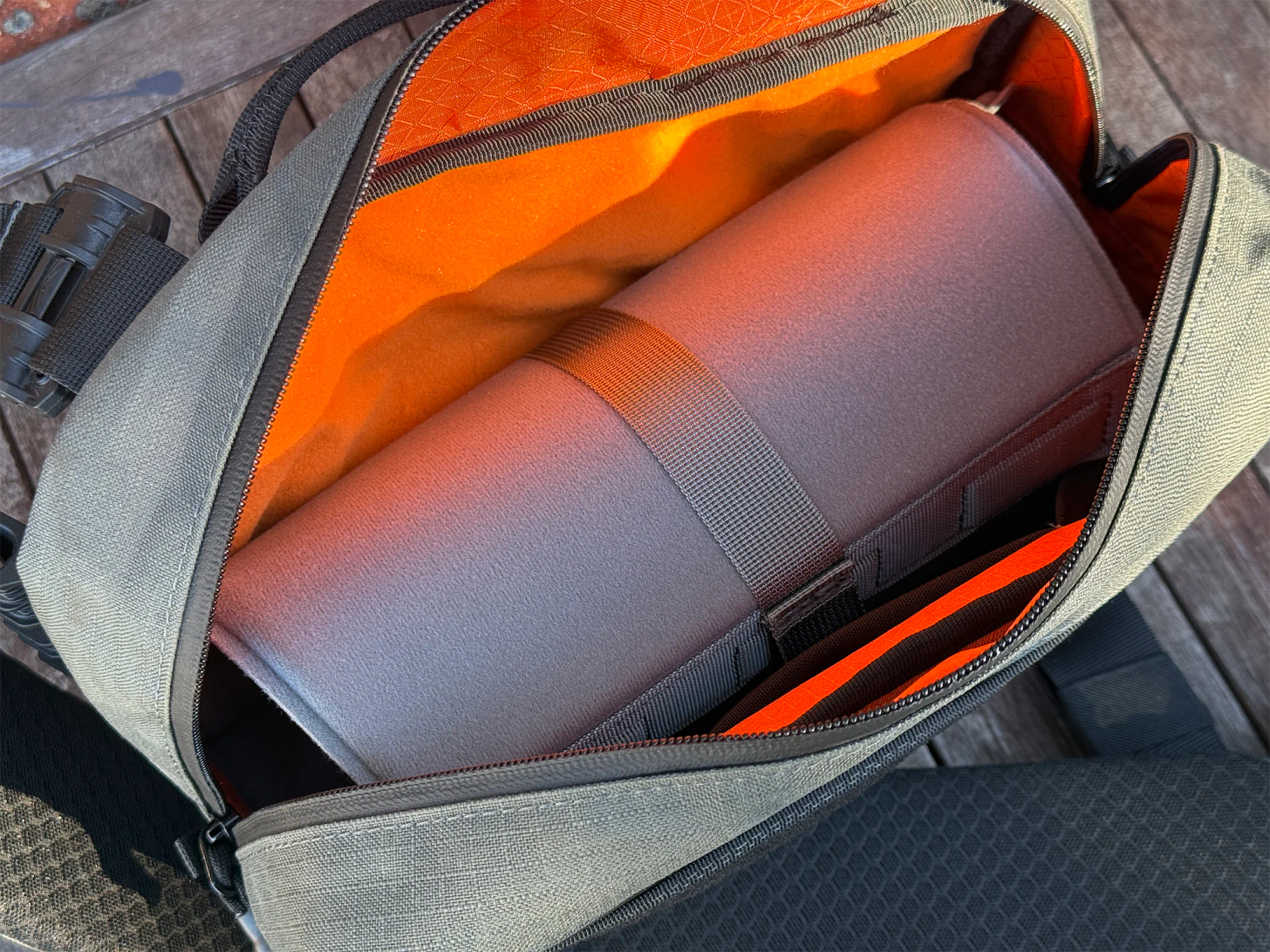
The L3 Pro comes with a uniquely designed camera cube which can easily be installed or uninstalled by simply detaching it from the velcro liner. The cube is designed to offer your camera equipment a higher level of protection by wrapping it in a semi-rigid shell, and it has two adjustable dividers which are built into the cube and can be enabled or disabled but not removed. They’re similar to the Flexfold dividers you get in Peak Design bags, but much more rigid and not as padded.
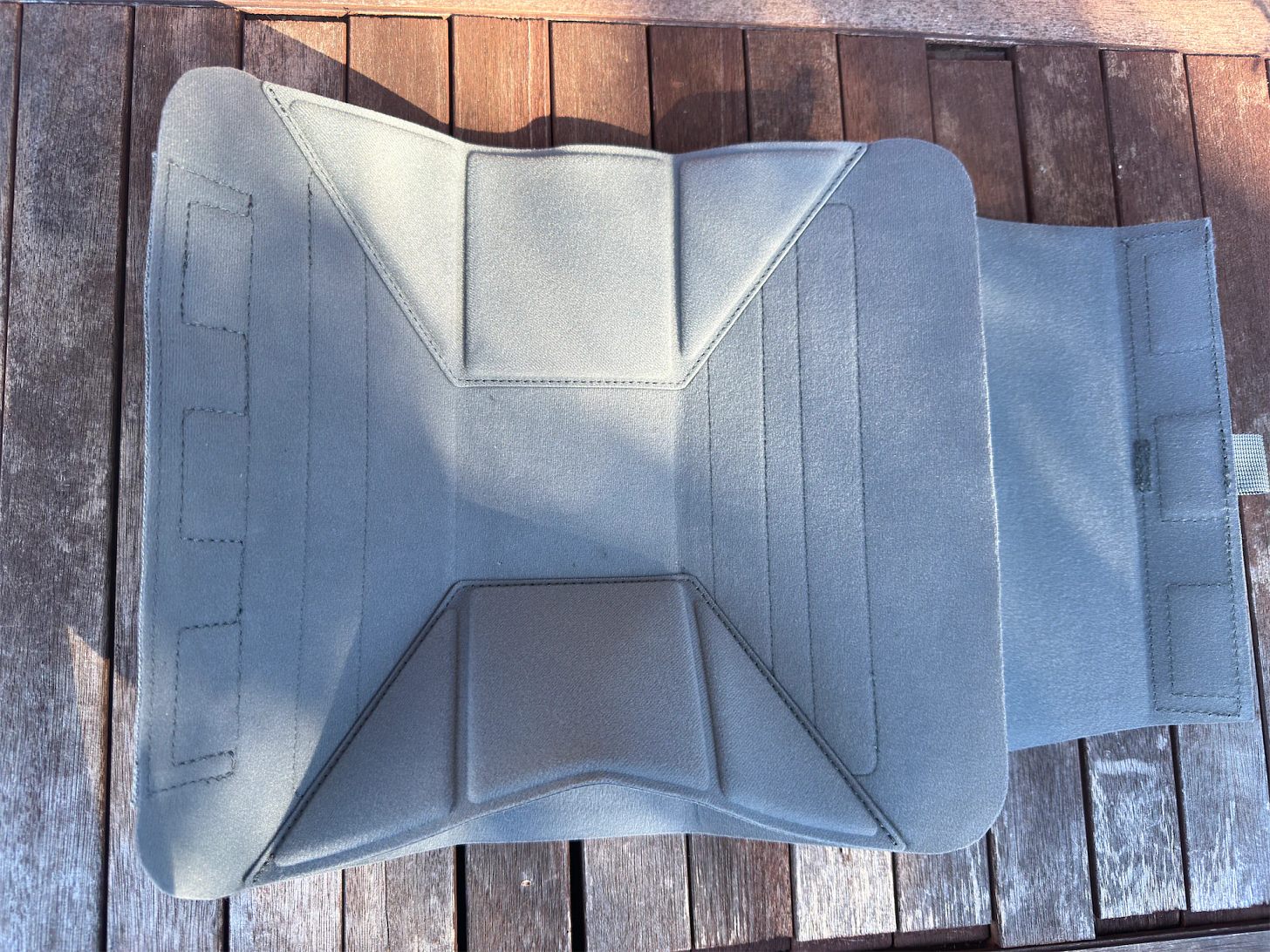
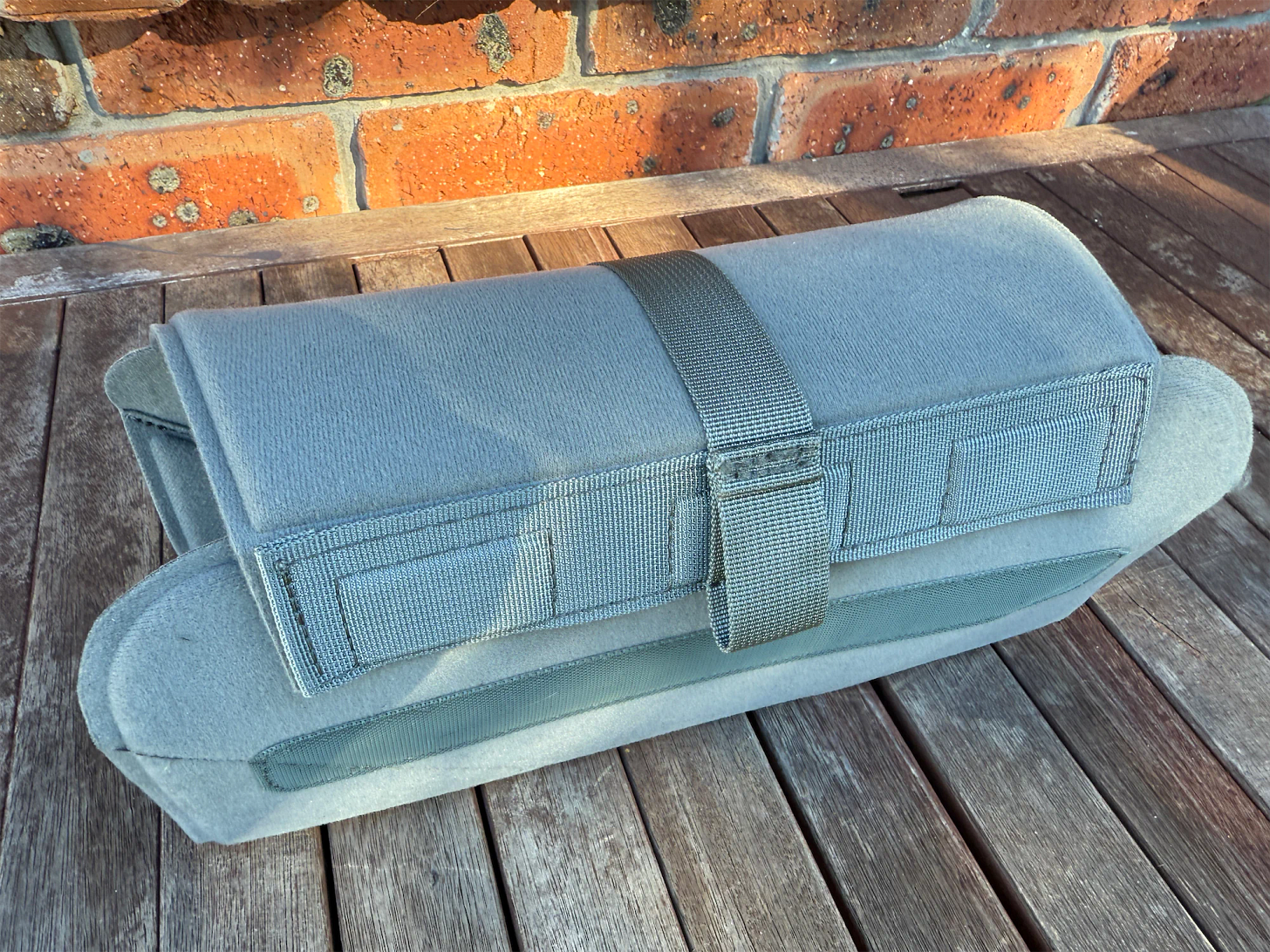
There’s also a lid for the cube which fixes on via velcro on one side and a magnetic latch on the other. I didn’t much like the lid because it just takes up valuable space in the bag and is awkward to open and close. With that lid attached, the cube couldn’t accommodate my Fujifilm X-T4 even resting on its side – I get that it means you have protection from above, but it just greatly reduces the overall utility of the bag and cripples its litre capacity. But this bag’s all about being flexible, so I just placed that protective lid in the B.O.B.T.B.T.B. and moved on with my life.
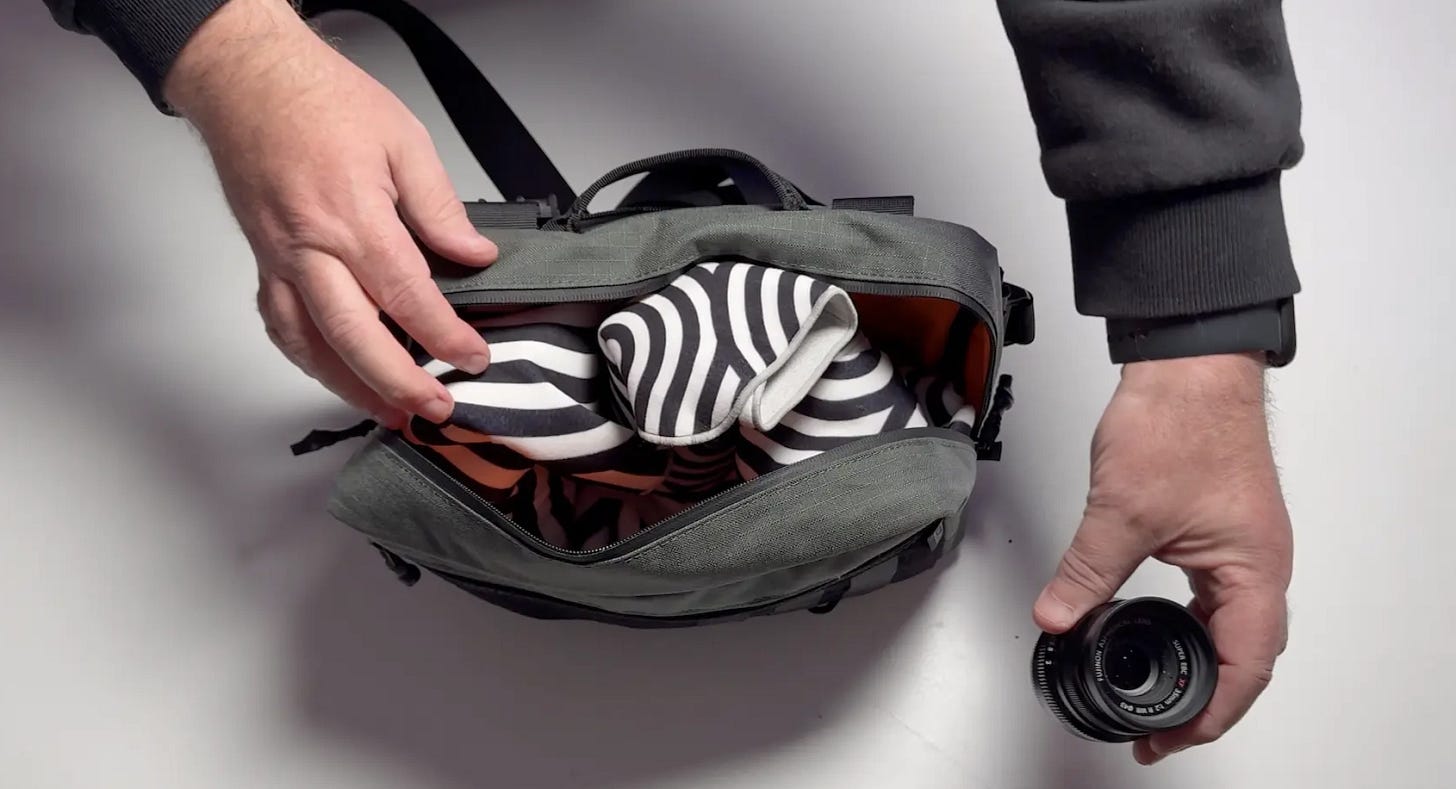
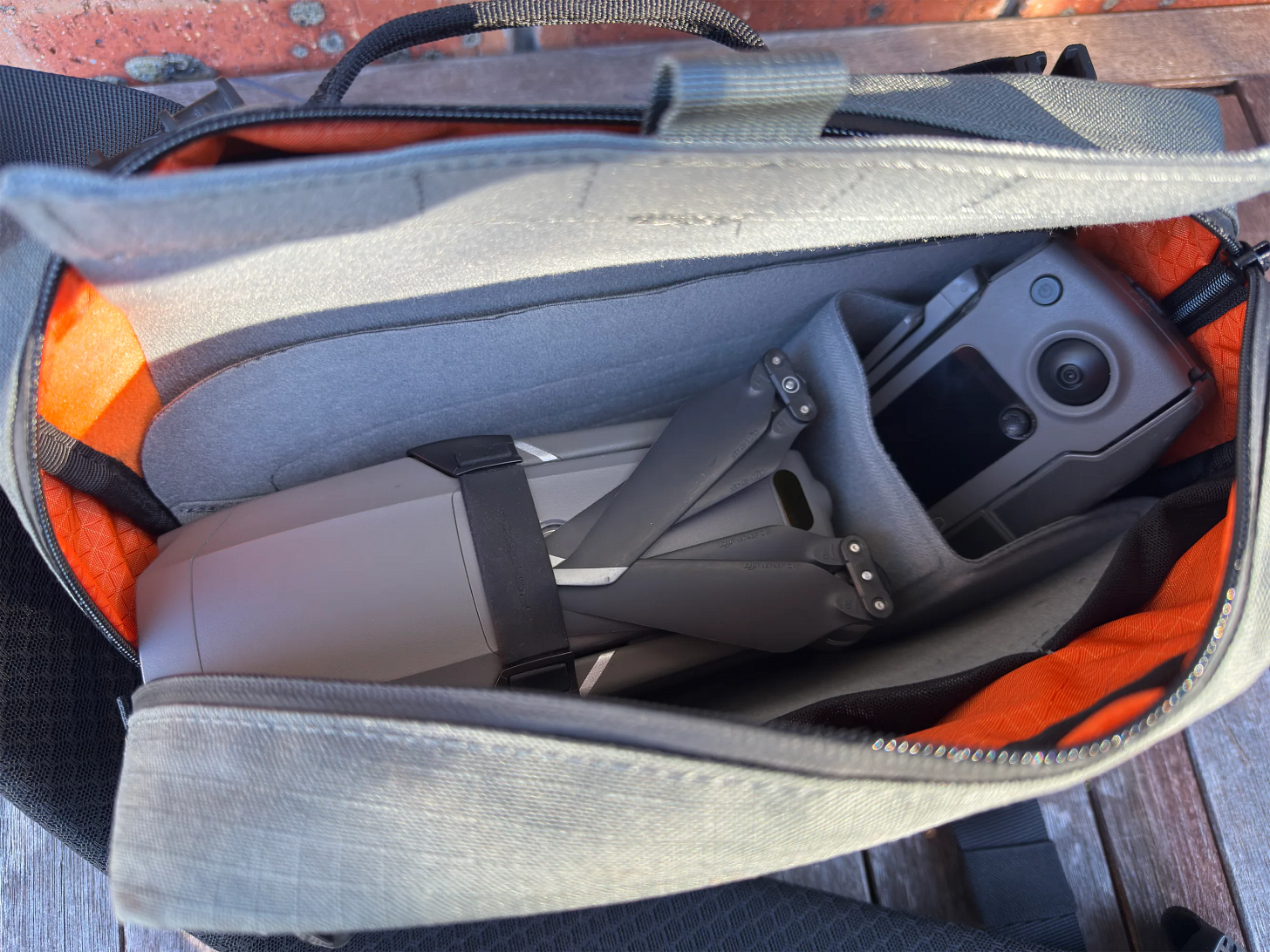
In terms of useful capacity you’re looking at enough room for your camera (with one lens attached) and one other lens, but you’re not going to be taking your 70-200 or 100-400mm telephoto with you unless it’s the only one you’re taking. Alternatively you could fit a drone, a controller and spare batteries, along with a small vlogging camera such as a Sony ZV-1. For maximum space you could of course dispense with the camera cube entirely – wrap your camera and glass in some 3 Legged Things Wrapz and you’d have room for the camera and three lenses with all the protection you need.
Conclusion
I think the key strengths for this bag are firstly, its flexibility and secondly, its straight-forward design. It has some problems too, but let’s talk about the good stuff first.
The flexibility is a core advantage because it can lend itself to a heap of purposes. Yes, it’s great for carrying round a mirrorless camera and a lens or two, but it would also make a great commute bag, a drone bag, a travel bag, or a school bag. When I talk about straight-forward design, I mean that – for the most part – they got the basics right: little things like the fact that it stands up when you rest it on a table, that you can use the zips with one hand and they don’t snag on the corner, that you can switch out the strap or wear it on the left or right side.
In terms of shortcomings, there are a couple of things I wish they’d done differently. When I received this bag it came with the standard strap with the regular adjustment clip, but following some early feedback, Tactical Geek have added a quick release strap to their bundles and I strongly recommend you opt for it. The camera cube is a cool design and while I understand why it has a lid, it’s not very practical in terms of useable space with that lid installed – fortunately it’s just a velcro attachment and can therefore be removed.
Taking that cube in and out of the bag is a real ball-ache too because it constantly catches on the velcro, but I guess you’d probably only remove it occasionally, having arrived at an internal setup that works best for you.
It’s not often that I complain about stuff being unnecessarily chunky, but I feel like the shoulder pad is too bulky for a bag this size and also too rigid. It’s a two second job to remove so it’s not a deal-breaker, but something a bit slimmer and more flexible would definitely have suited the bag better.
All things being equal – and given that Tactical Geek have updated the design to include an optional quick adjust strap – I am happy to recommend this bag. With its 7.5 litre capacity, this bag’s closest competition is the 6 litre Peak Design Everyday sling, the 6 litre Wandrd Rogue Sling, the Shimoda Boa top-loader or the 6 litre Bellroy Venture sling.
As someone who owns two Peak Design sling bags (the 9 and the 6) and the larger 9 litre Wandrd rogue, I would say that the L3 Pro has some advantages over those bags and certainly fills a quite specific niche for me. Of the alternatives, the one that gets closest is the Shimoda top-loader, but that’s only water resistant and has the same annoyingly stiff top flap as the Peak Design slings.
The L3 Pro is a surprisingly capacious bag with top-notch build quality and excellent materials used in its construction. It’s ideal for packing the drone or a mirrorless camera and while I feel it’s well suited to urban environments, it also has good adventure bag credentials with that waterproof ripstop fabric. So if you want a rugged and flexible everyday-carry that helps rather than hinders your photography, this bag actually delivers, which shouldn’t be remarkable, but somehow is.
Do you favour the smaller sling bag style for transporting your camera gear? Or is it backpacks all the way for you? I’d love to hear your comments.
Also published in RAW & Unfiltered on Substack.