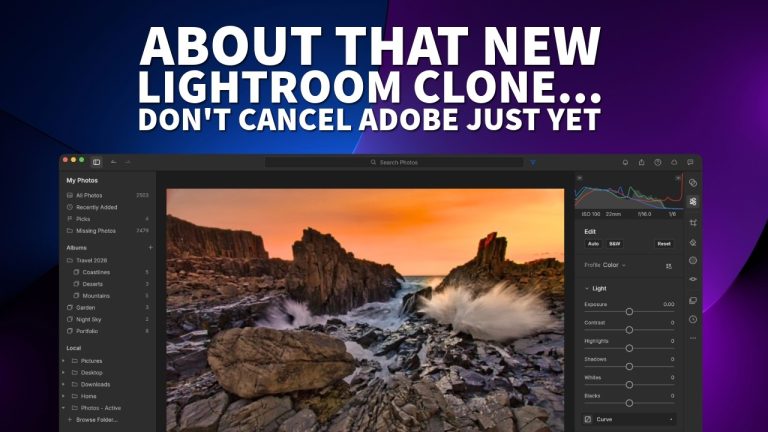
My Prime Day recommendations … absolutely fucking nothing
How to win Prime Day by refusing to participate.
 Andy Hutchinson
9 min read
Andy Hutchinson
9 min read
Yes, legends, it’s that time of year once more, as the global retail industry gears up for that orgy of consumer athleticism that we call the run-up to Christmas.
Massive corporations with global supply systems commanding vast container ships and fleets of aircraft have been moving inventory around the planet for months, ready for the peak celebration of capitalism.
Such is the frenzy regarding the acquisition of ‘stuff’ at this time of the year that it even has its own saints day – Black Friday – when big box stores transform flacid suburban parents into blood-thirsty contestants on the Purge.
Never one to miss an opportunity, shy and retiring multi-billionaire Jeff Bezos co-opted the retail store Black Friday sales frenzy with his own online version – Prime Day. Every year, about this time, YouTube is awash with videos listing ‘must-have’ Prime Day bargains replete, of course with full Amazon affiliate links in the description.
Such is the onslaught of consumer glorification, a tidal wave of ‘don’t miss out’ bargains that you feel almost obliged to join in. But I’ve got a radical idea for you. Instead of getting swept along in the fast-flowing currents of ‘lightning-deals’, ‘for you’ and ‘ends midnight’, how about this prime day you buy absolutely fucking nothing.
Plastic Fantastic
I love a bargain. I do! I also love the process of buying stuff. I’m a photographer and an unashamed geek – I love technology and gadgets – that stuff speaks to my soul – it always has.
Dotted around my home-office are endless examples of purchases I’ve made over the years – some successful, some not – when I gleefully hit that ‘Add to Cart’ button and anticipated the arrival of some new gizmo that would improve my life by some tiny margin.
And while I’m not turning communist and advocating for the abolition of private property – I’ve also come to accept that I’m being grifted, treated like a mark, and that I need to take a bit more responsibility for my consumption.
We are all Neo
Remember that scene in the Matrix when the full horror of the human condition is revealed and it turns out that mankind has been transformed into a biological parallelised battery for thinking machines? I feel like that’s how these global corporations consider us.
We are a resource – nothing more and nothing less. They exist to earn a profit for shareholders – the 1% – and we have the money that makes it possible.
It’s been 21 years since the very first proper online sale back when it was the ‘information superhighway’ – (Sting’s Ten Summoner’s Tales trivia fans) and that’s a couple of decades in which these businesses have steadily tweaked and improved their systems and ‘value propositions’ to the point where it verges on psychological warfare.
Think for a second about how slick the whole process is these days. If you have an Amazon account then it’s literally just a single click to purchase an item. They have completely removed any friction from the system – all obstacles and frustrations that might have caused you to pause before clicking that left mouse button.
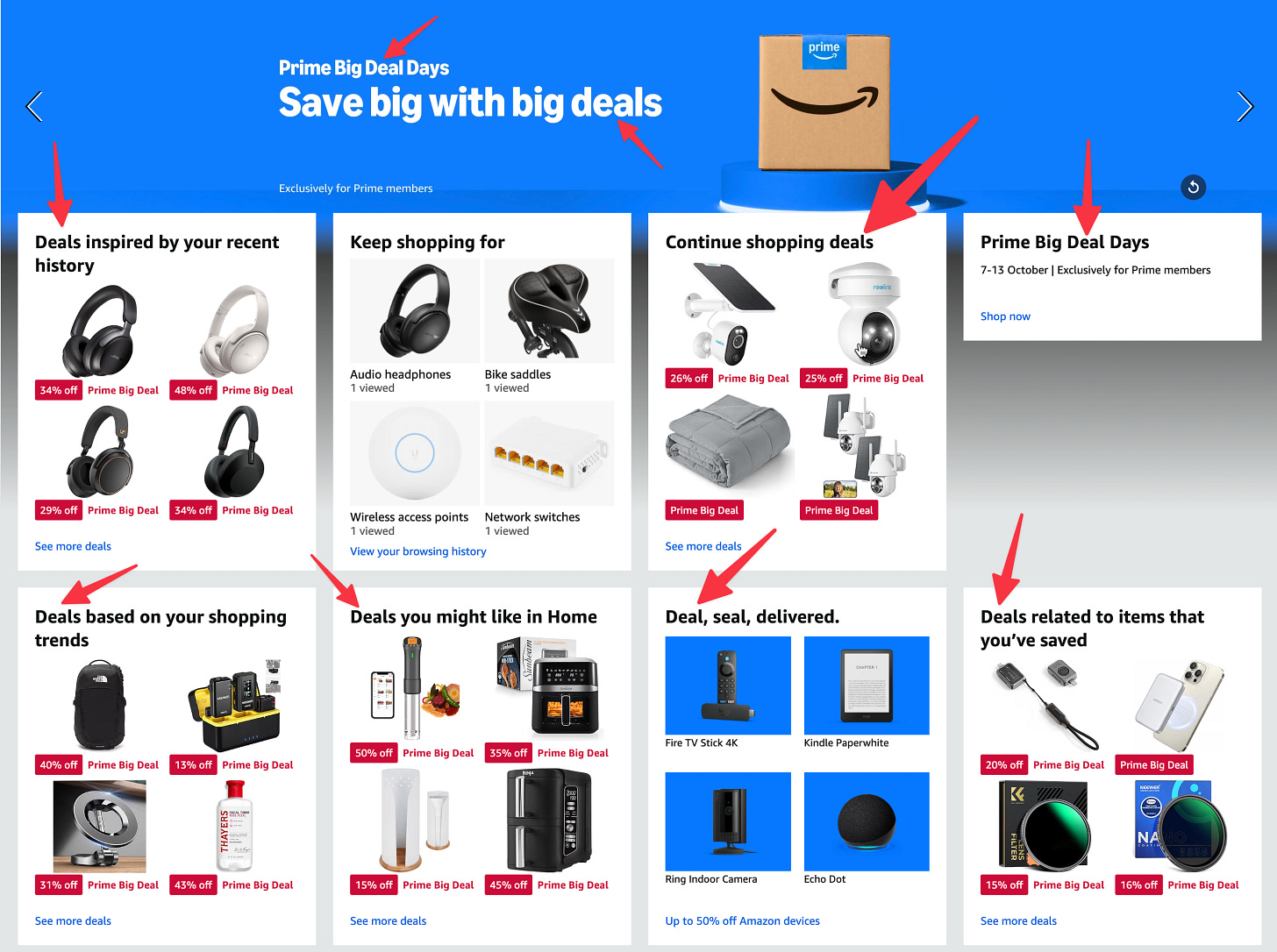
Ecommerce has been gamified. My generation – GenX – grew up on Doom and Quake – when you’d have a brief window of opportunity to grab the rocket launcher, red armour and quad damage before your mate did — now the same adrenaline spike kicks in when there’s 12 minutes left on a Lightning Deal for an air fryer you didn’t even know you wanted.
The dopamine kick that you get from a ‘like’ on one of your photos on social media, is the same as the one you feel when you ‘Buy Now’.
The Money-Saving Myth
Driving all of this purchasing – Black Friday, Cyber Monday, Boxing Day, End-of-Season Sales and Back-to-School – is the core premise behind the grift – the idea that you will save money.
Isn’t that just a little absurd though – when you think about it – spending money to save money. It’s like eating more because you’re trying to lose weight.
The other day I was strolling happily down the aisle of dreams in Aldis and I saw that they had one of their regular ‘content creator’ bits – you know the ones – ring lights, vlogging kits and mic-stands. And they had this Bauhn condenser microphone on sale for 25 fucking dollars. I mean, how could I not? I’ve been thinking about getting a desktop microphone for ages. And here’s one that’s just 25 bucks!
I didn’t really stop to consider that fact that it’s USB-only and therefore useless for the way I record my videos with my X-T4 and an Atomos Ninja V monitor. Or even that the existing wireless Anker microphones I have do a brilliant job already. I liked the look of it and I bought it and apart from a brief test and the near-instant realisation that I’m a dickhead, I have never used it.
Prime Day is the pure, distilled and highly potent endgame of the ‘money-saving’ mechanic. The word Amazon uses literally everywhere is the ‘deal’. ‘Save big with big deals’, ‘prime day deals’, ‘deals inspired by your recent history’, ‘deal, seal, delivered’ – no really that last one’s totally legit.
I’m not going to lie to you – all this shit works on me – I fall for it all the time. But then, like many of us I have buyers remorse and think about the things I could have spent that money on. And then I feel like a chump.
Things have certainly changed substantially in the last couple of decades – and not for the better.
The End of Ownership
When I was kid growing up in the late ‘70s and 80s consumerism, lusting over stuff, was a much more understated affair.
Start of every school term my old mum would march me and my two brothers down to the high street shoe shop and buy us all a new pair of Clarks Commandos shoes. And that was usually the extent of footwear purchasing for the year, because the football boots and Adidas cross-country trainers got handed down.
Little bit different these days though isn’t it. And while the annual new pair of school shoes – or more likely trainers – is undoubtedly still a thing, buying footwear is now practically an olympic sport. And in order to feed that cycle of purchasing, the global corporations have used all sorts of sneaky methods to keep their profit margins climbing ever skywards.
One of the first methods was shrinkflation which is when the manufacturer sneakily reduces the volume of product inside the packaging, little bit by little bit until you’re paying the same for something that’s half the size it used to be.
Then there’s the steady adoption of built-in obsolescence, which is when the stuff you buy – particularly consumer electronics – is not built to last, but simply for long enough to outlast the warranty
The global electronics companies also went out of their way to make it virtually impossible for an ordinary person to repair a product they purchased – to the extent that if some small issue occurred with it – your only option was to throw it away and buy a new one.
This is all part of a global effect which goes by the name of enshitification – a phrase created by Cory Doctorow – that describes the predictable decline of platforms and products as they prioritise profits over users.
We see that enshitification everywhere these days and things like subscription packages for software you used to purchase for a single price, are one of the most common examples.
Add all that stuff together, the shrinkflation, the built-in obsolescence, the enshitification, the subscriptions and the old-fashioned price-gouging and you realise the businesses are treating us like cost centres with pulses – roadkill on the profit margin.
Human Waste
There is of course, also a wider implication to all this unfettered consumption and that’s the ecological cost. I realise that it’s deeply unfashionable these days to mention alternatives to the fast fashion and fast food culture – the plug-and-bin electronics, the annual smartphone replacement ritual.
We’ve normalised waste to the point that landfills are basically our civilisation’s memory banks – layers of plastic fossils documenting every passing fad and trend. The “unboxing experience” is now an industrial art form: triple-layered cardboard, vacuum-moulded plastic, and enough silica gel to preserve a pharaoh. Shipping containers criss-cross oceans so we can get another set of Bluetooth salt shakers before the weekend.
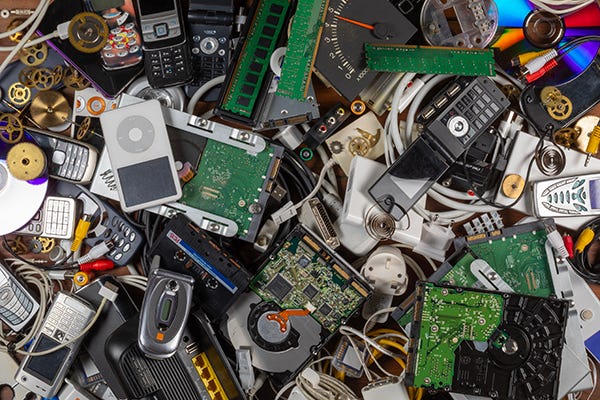
And yet, when the battery dies in our latest gizmo, or the software stops updating, the same miracle of logistics works in reverse – it all quietly migrates to some other poor bastard’s backyard.
We don’t recycle; we outsource decay. It’s not about making you feel guilty – it’s just arithmetic. Everything you buy ends up somewhere – and that somewhere is running out of room.
Being Intentional
There are, of course, many valid reasons to wait until black Friday or Prime Day or Boxing day before making a purchase. There might be a camera that you’ve had your eye on for some time and it will finally come down to a price-point that you can manage during those sale periods. Or you might be hanging tight to upgrade your photo editor of choice because you know the developers always do a seasonal price reduction and it means you can get the stuff the cool kids are playing with.
Or, like me, you might have dropped your two week old Fujifilm X-T4 in a salt-water river as you fumbled a lens swap and have only just finished ugly crying long enough to pick a new one up with 15% off.
But equally – you might actually need absolutely fucking nothing else added to your colleciton of stuff and you’re buying not because you need it but because because you’re bored, or anxious, or chasing the little dopamine fireworks that brands design on purpose.
So here’s a way forward – be intentional: if it won’t measurably improve your work or your life, let the cart sit empty. Keep your money, keep your focus, and leave the “limited-time-deal” noise to the suckers.
If you have some discretionary funds at your disposal, then spend that money on experiences, not stuff. Book a weekend away somewhere, buy a train ticket to somewhere interesting, invest in a course – those are things that will add meaning to your life.
And if you don’t have discretionary funds at your disposal then what are you thinking? The banks and credit card companies have been bleeding people dry for millennia and are infinitely better at it than Amazon.
You know, legends, these corporations are only just getting started and they’re doing it under the misguided belief that they are in charge. But here’s the truth – they are not in charge. If we stop playing the game, then they are screwed. They exist purely to extract the maximum amount of cash from us as is possible – and that is it.
They market themselves as brands because it enables us to divorce the idea that we’re spending your money with some faceless corporate monolith and instead feel like we’re banking it with a mate.
Amazon is not your friend, Apple is not your friend, Samsung, Microsoft, Nvidia, Adobe – fucking DuoLingo – none of these organisations give a single fuck about you, they only care about your spending potential.
And because they are reliant on us, we hold the power. Be intentional. Don’t feed the meter and remind these organisations where the real power lies.
Also published in RAW & Unfiltered on Substack.