Is The Weight Of Expectation Killing Your Love Of Photography?
B
ack in the before-times, when all of human knowledge was stored in books in libraries and not on servers in data centres, you only knew you weren’t as good as the photographers you’d actually met. It was, now that I reflect on it, a great time to be alive, because the Internet hadn’t arrived and we mostly lived in blissful ignorance of our abilities.
And while hooking the entire planet up to a fully inter-connected network has made all of human knowledge instantly accessible, it has also thrust every single one of us into a global competition which has no rules, no privacy and no end date. Unfortunately we didn’t notice it was happening until it was too late, and all it cost us was our dignity and our happiness.
The need to ’succeed’ is the plumbing behind all of the most popular websites on the planet and we, the great global public, have been swept along the outflow pipes on Insta, Facebook, TikTok, Reddit and YouTube like buoyant turds caught in a feculent maelstrom of engagement metrics, bot spam, algorithmic approval, and other people’s staged-outrage highlight reels.
For photographers in particular, it has made us feel like we don’t measure up, that we constantly need to be pushing ourselves towards some infinitely vanishing finishing line and that we are always being judged by our last photograph.
You used to be pretty good at this. Then you got broadband.
How Did We Get Here?
Today we’re talking about the ridiculous performative chase that has absolutely bollocksed up the hobby of photography for so many people and transformed professional photography into a perpetual grind for metric-driven clout.
Left unchecked the mood-altering effects of the globally popular websites that have replaced the original world-wide web have caused more than one photographer to give up, because nothing they shoot ever feels good enough. The creep towards this current bleak timeline has been slow but unstoppable, and most of it is built on comparisons.
Now, there are people out there who thrive on this stuff, they love trying to match-up to the algorithm’s perceived standards and to then exceed them. There are also people out there who find it enormously demotivating, folks who hate seeing their work, their ‘output’ placed alongside everyone else’s and judged.
The comparison trap isn’t new, but the ‘bubble’ makes it feel relentless and impossible to escape. It has heavily eroded, if not destroyed, the distinction between healthy ambition and the kind of ambition that poisons the process.

Endless exposure to other people’s work has made it feel like every photograph has to justify itself. An image can’t just exist, isolated, on its own, it gets defined by the images that surround it.
But I don’t actually think comparison is the real problem. As it stands, right now, comparison seems to be only the delivery mechanism, but expectation … expectation is the poison.
This oppressive weight we feel pressing down on us when we pick up a camera comes from three distinct sources: personal expectation, social expectation, and cultural expectation.
Personal Expectations
Have you ever used the phrase, “I’m my own worst critic”, or “I’m my own worst enemy” or perhaps, “I’m always moving the goalposts on myself?” They sound like harmless bits of self-deprecating wisdom, the sort of thing you’d say with a chuckle in your voice, to another photographer you were having a post-shoot chat with, but I’d argue that there’s fuck all positive about talking to yourself like an arsehole.
This kind of attitude, which we could most kindly call self-deprecating and most-harshly pointlessly negative, seems to have become the default for most photographers. It’s a defensive habit: if we slag off our own work first, nobody else gets the chance.
Perfectionism can be a potent driving force, but there’s a difference between wanting to improve and deciding in advance that whatever you make won’t be good enough. In many ways it sets us up to fail, and to feel fucking miserable about failing, before we even begin.
If you really are your ‘own worst enemy’ then how the fuck are you ever going to do something that satisfies you?
And note the ‘pleases you’ bit. Ultimately the kind of photographs you produce are nobody’s business but your own and if you like taking oblique black and white shots of wheelie bins with homemade pinhole cameras constructed from Heinz Baked Bean cans, then fill your fucking boots.
We worry about the gear we’ve bought and the expectations we held for the images it would help us produce, and we blame the kit when the results aren’t what we expect. But creative dissatisfaction rarely has a technical solution.
The expectation to always have a ‘new’ camera, a new lens, the fantasy that the next purchase would reignite excitement and lift the existential dread.
Social Expectations
Social expectations are, of course, outside of our control, unless we opt out completely. They used to be anchored in the real-world, in camera clubs and college courses for instance. But these days it’s mainly online and it’s overwhelmingly toxic.
From the Internet’s origin story, with its thousands of websites for photographers, the field eventually whittled down to basically one: Instagram. When many photographers began posting on Instagram it was a beautiful experience with genuine camaraderie. But then, in order to better monetise the experience, Zuckerberg ditched the simple chronological feed in favour of one driven by an algorithm and in doing so he turned it into a competition. And once he did that, you were expected to out-perform your peers, to score more likes and follows, or nobody, not even your old mum, would see your photographs.
All social media platforms adopted the same algorithm-driven design and what was once about the simple act of sharing became a death-spiral of nervous trend-driven hashtag optimisation, wanking off photographers you hated in the hope they’d give you a reach-around and an endless chase for ‘engagement’ so vacuous it made a 13th birthday KPOP party look like peer-reviewed research.
And yet, so many of us bought into it. Consumed endless fuck-awful videos about ‘optimising our feeds’, such that a casual drop-in could enjoy several thousand near-identical photos with the same acid-trip colour grading and repugnant captions about ‘authenticity’, which the algorithm had quietly confirmed was performing 34% better than captions about craft.
Expectation shifted from the joy of sharing those micro-seconds we captured on our cameras, to sinking a metaphorical shiv into the gut of the photographer two rungs above us on a ladder that hate and envy built.
Photography YouTube influencers with hundreds of thousands of followers subtly shame your taste in photography during back-slapping, face-aching collaborations with other photo influencers broadcast from the back of a customised van that they, as successful entities, were expected to own, live in photographically, and occasionally pretend to cook breakfast in, while explaining why your creative vision demands a lens that costs more than a used Camry.
Cultural Expectations
But even before Zuckerberg and the other antisocial media barons decided to pivot into the weapons-of-mass-control market, there were of course cultural expectations on photographers too.
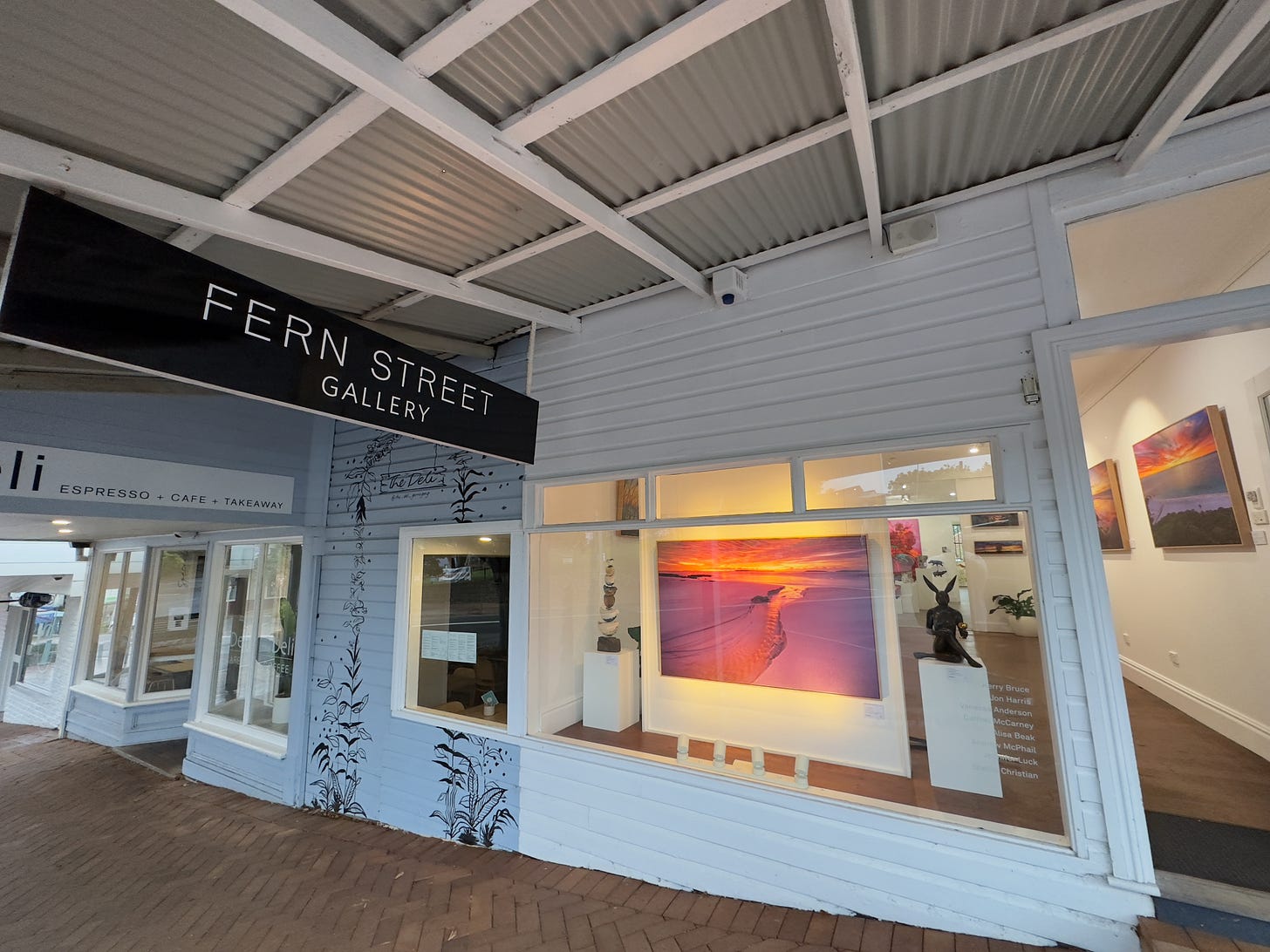
Galleries and competitions have existed for as long as there has been art and many photographers dreamed of the day they could have an exhibition, or perhaps be ‘discovered’. Unfortunately photography doesn’t command nearly as much respect as other art forms due to the near-instant nature of its production, and only a minuscule percentage of photographers ever manage to ‘show’ a photograph, let alone find financial success in ‘fine art photography’.
But the weight of expectation on photographers to ’succeed’ in the classical sense begins early. It begins with well-meaning friends who congratulate you on your photographs, perhaps because they genuinely believe they are good, but more likely because they’re just trying to be nice. Those early encouragements lead us down the road of upgrades, better lenses, better cameras, better software to edit the photographs. And before you know it, even if you avoid uploading your work, the expectation to create is pressing down on you.
Like all hobbies (and creative jobs), photography can get expensive and there’s often pressure from those closest to us to realise that investment, to use it as often as possible and to create, even when the mood doesn’t take us. That audience, however large or small it might be, comes with you, even when you’re alone with a camera on a hillside in winter and you’ve just realised you left the tripod in the car.
The goal isn’t pretending expectations don’t exist. The goal is learning how to live alongside them. We need to remember that hobbies like photography do not have to be useful, productive, monetisable, or publicly impressive.
The Way Forward
Expectations, wherever they come from, can either be a challenge or a ball and chain. But the net effect is that you start evaluating photographs before you’ve even pressed the shutter.
Every outing becomes a test. Every image becomes a verdict. And we become attached to outcomes rather than experiences.
What’s needed, I reckon, is to move from expectation to intention. Instead of: will this be any good? Will people like it? Is it worth posting? Is it portfolio-worthy?
Ask: What do I care about? What makes me curious? What am I trying to learn? What caught my attention? What happens if I just try this one dumb-sounding thing?
In many ways we need to remember what it was like when we first picked up a camera, long before those expectations started piling up at the front door, demanding our attention. I think we were happier because we were curious. We photographed stuff simply because it was interesting and since we had no real frame of reference there was nobody there to quantify and rate our photographs. We experimented because that was the only option, before the oft-repeated conventions of photography fucked it all up, the dreaded rule-of-thirds, or shoot-to-the-right or what-is-your-foreground-interest, we just thought ‘oh! that looks nice’ and we pressed the shutter button.
Realistically, the multiple layers of expectation, personal, social and cultural, are never going to disappear. You can’t ignore expectation, but you can kick it the fuck out of the driving seat and stick it in the boot in order to muffle its screams.
My advice? Photograph what you like and let the rest of ‘em get fucked.
Also published in RAW & Unfiltered on Substack.